The long goodbye
As I was leaving Ystad, the light breeze gave me ample time for a long goodbye to Scandinavia. I replayed the scenes of the journey: the first bow-to-rock mooring at Strupö and the dense fog the next morning, the scent of pine trees on Grönskär, Coelacanth anchoring in Solberganäset, in a bay surrounded on all sides by forest, the long days and the evenings on warm granite rocks on Ringsön or Kupaklint, the cold swims and hot saunas in the Finnish archipelago.
Bells and blues
Ystad had been an ideal last stop on the way back from a long journey to the archipelagos of Finland, Stockholm and the Swedish east coast. There is a ship chandlery in an old railway building. Andy Beharrell’s Imray pilot calls it an “Aladdin’s cave”, and it is: everything a boat could need, new and old, in a shop where nothing seems ever to have been thrown away. Every day I went in, electric blues was playing, John Lee Hooker style. I returned the empty gas bottle there. Campingaz is not sold in Sweden, which runs on its own bottles, so I had bought one in Kalmar on the way north, with an adapter, and now handed it back on the way out. In its place I bought a knife of Swedish steel, for cutting rope in an emergency.
The town is medieval and looks it. Half-timbered houses lean over the lanes, brick gables face the square, and the streets run downhill to the water. A walk along the ferry harbour in the evening revealed the same scene as in Kiel at the beginning of the journey: people at the quay, fishing at sunset. Back on Coelacanth, the clock tower rang. The bells reminded me of Dutch carillons – the first church bells I had heard since leaving the Netherlands in June, and an announcement of what was to come.
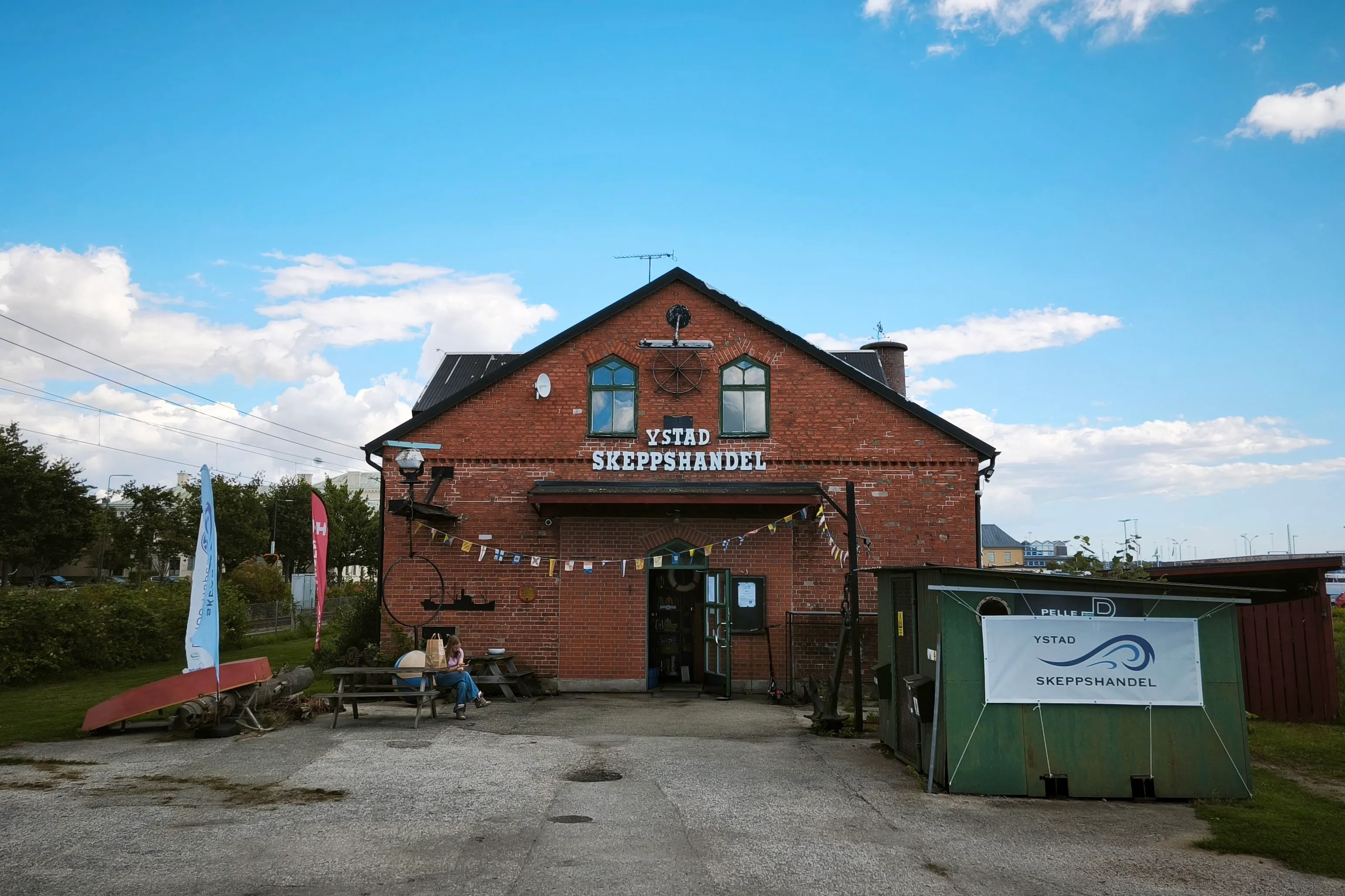
Ship chandler in Ystad, Sweden.
The stop-overs I did not make
The weather forecast promised three days of easterly wind that I wanted to make good use of to reach the Kiel canal. After that, frontal thunderstorms ahead of a low-pressure system, not the heat thunderstorm that had woken me at anchor in Ærø in June. My departure from Ystad had been delayed slightly by a German boat that broke a finger pontoon clean off when unmooring – and then motored away swiftly. The last words from the captain were something about a malfunction and calling the harbourmaster. The crew of the Dutch boat moored to that finger woke to find their boat held only by helping hands.
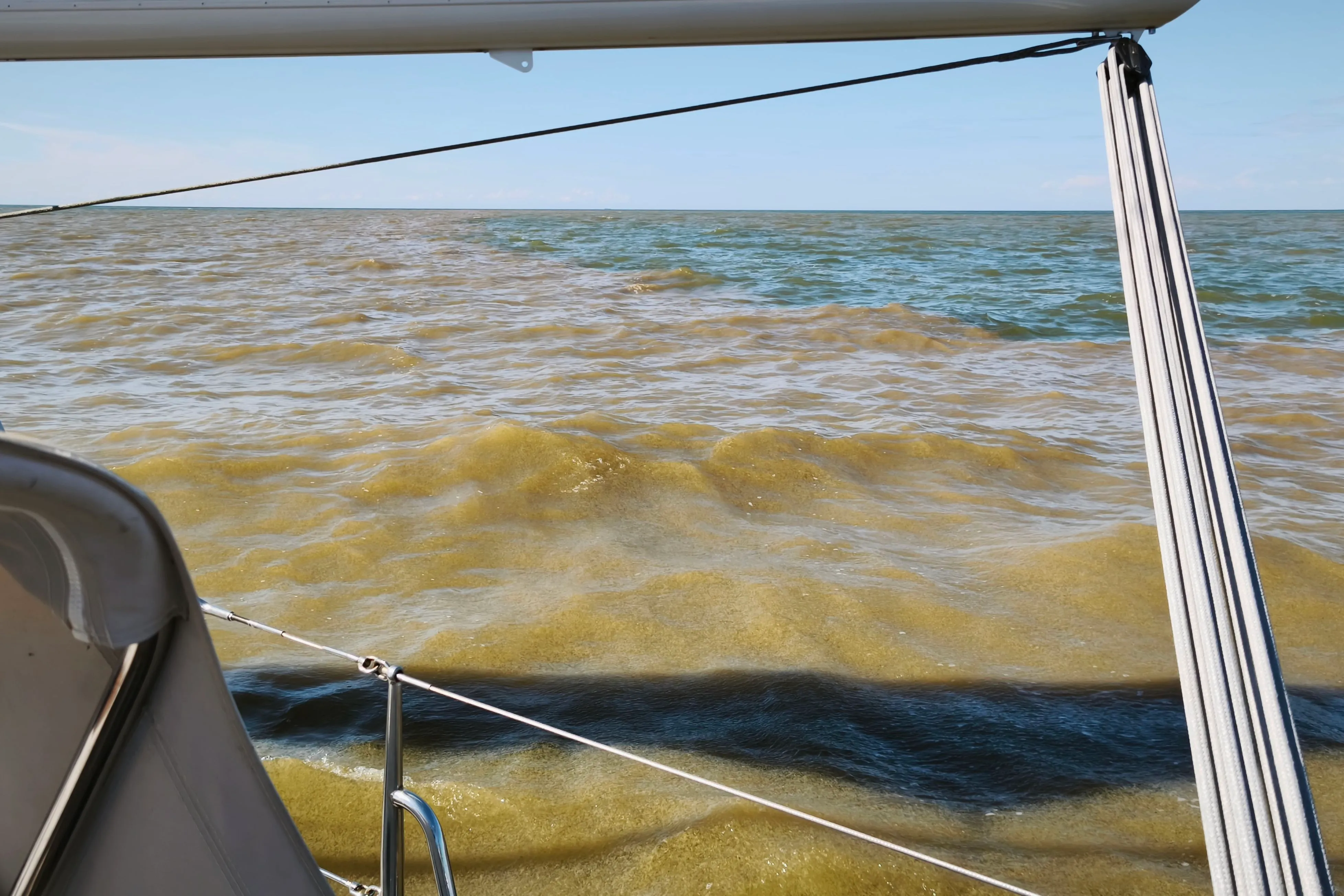
After patiently but unsuccessfully waiting for the easterly wind to pick up, I reluctantly set the big gennaker. The forecast had promised ten to twenty knots and I didn’t want to be caught with 120 square metres of sail up. Not until the afternoon, after thirty-three miles in eight hours, did a moderate breeze come. When I had finally passed the Danish wind farm Kriegers Flak, I decided to skip the planned stop in Klintholm on Møn and sail on southwards instead.
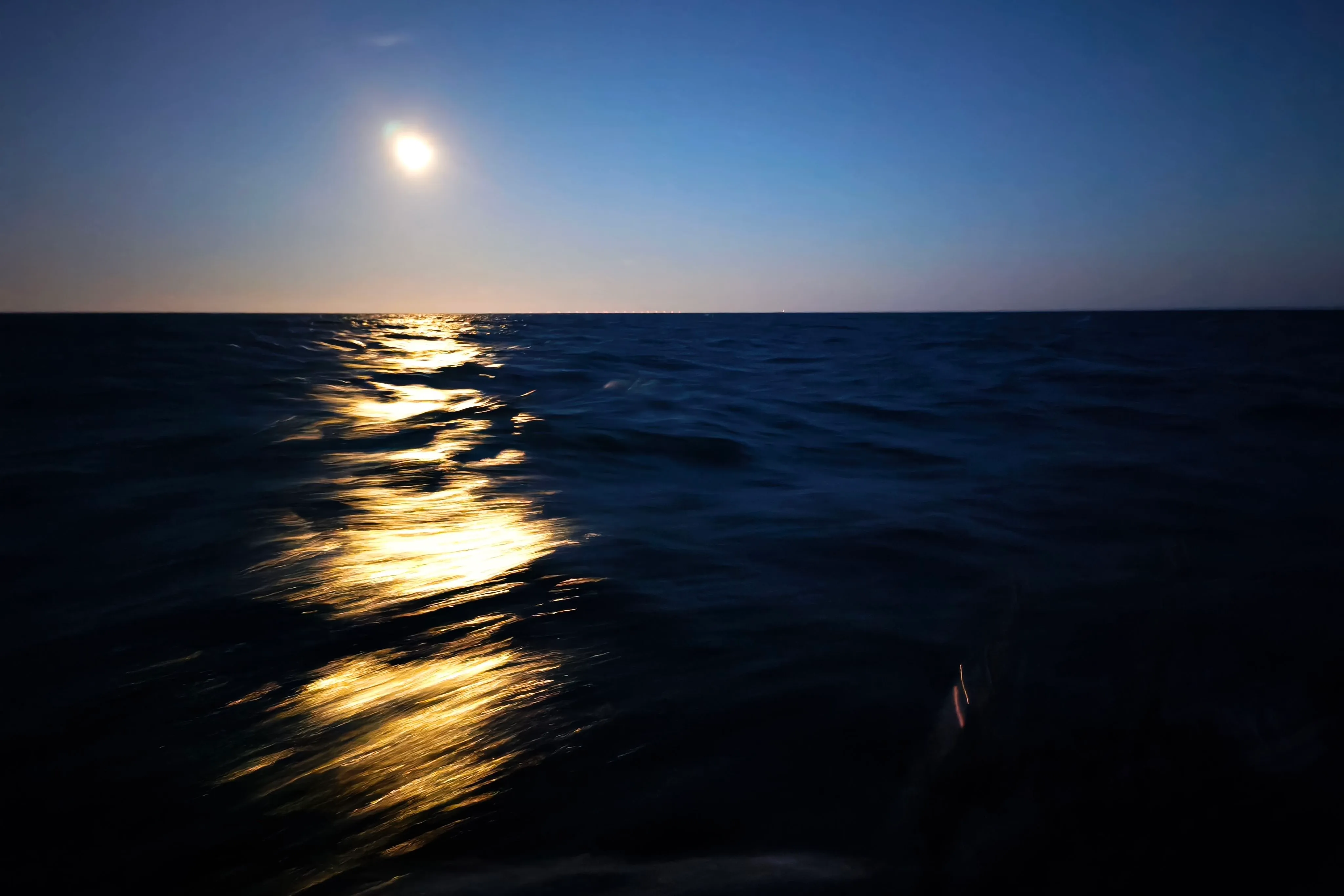
When the sun went down behind the white chalk cliffs of Møn, the wind picked up to force 5-6. Now a wild ride began with surprisingly big waves on the beam, some sending spray into the cockpit. The full moon rose in the east, where the waves had a long fetch across the open sea before running into the shallow waters of the Danish island of Falster. Coelacanth raced through the night at 7.5 to 8 knots. Shortly after midnight, I reached Gedser, where the shoals reach far out to sea. A pilot boat raced back into the harbour, followed by a passenger ship with brightly lit windows. Gedser was one of my potential stop-overs, but I carried on.1
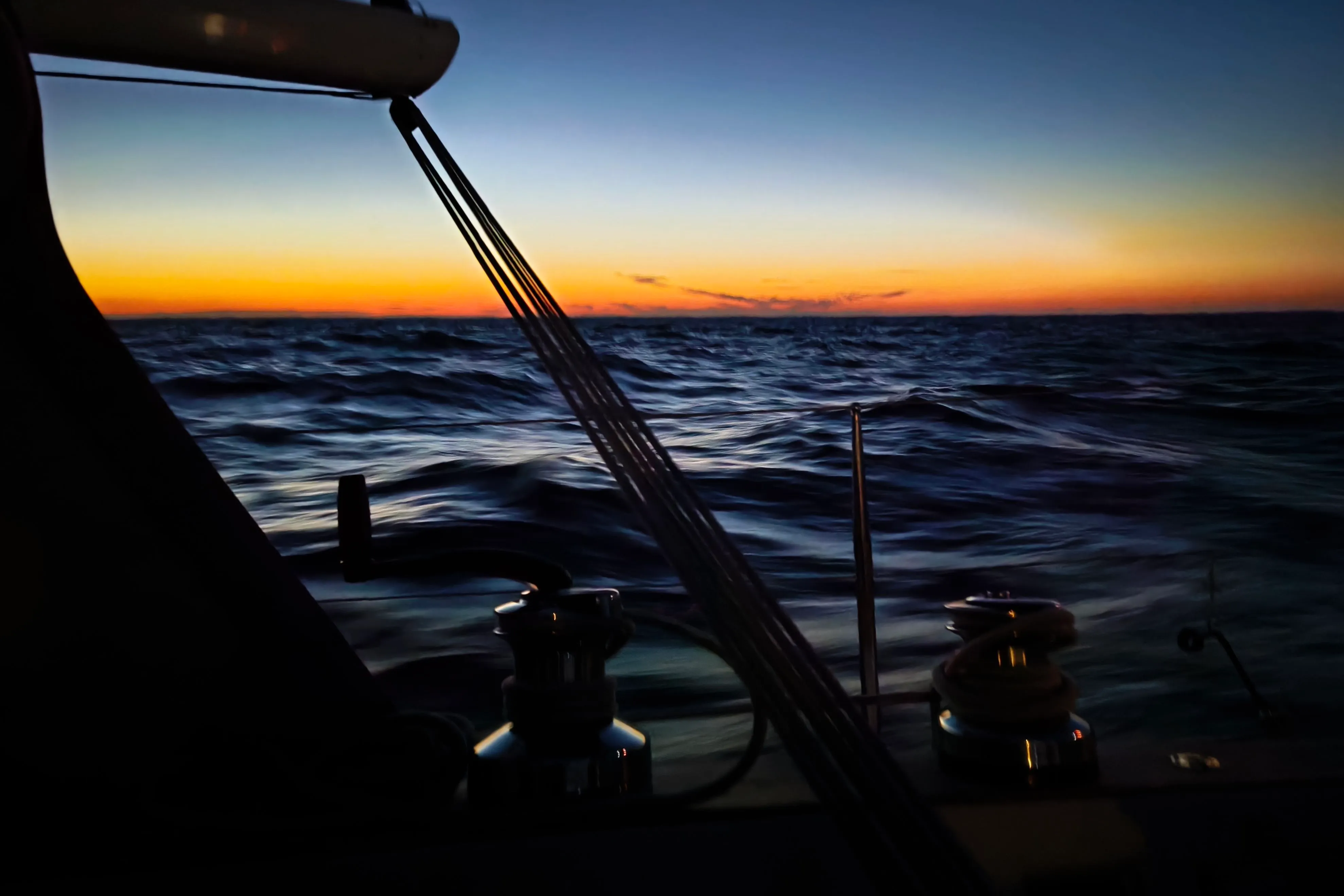
The last sunlight behind the island Falster, Denmark.
Three heights for one bridge
To the west of the TSS South of Gedser, I crossed the Fehmarn Belt, weaving between two freighters going east. I then had a few hours without traffic, which I spent lying down at fifteen-minute intervals with regular lookouts. An hour before sunrise I saw the bridge over the Fehmarn Sund. Sunrise came surprisingly late, two weeks and five degrees of latitude on from Finland. In a lively sea state, I took down the mainsail for the dead downwind course through the bridge. I checked the height of the bridge on the chartplotter – and was startled to read eighteen metres. That would be close! The paper chart gave twenty-one metres, which was a relief. The sign on the bridge said twenty metres. Nevertheless, I nervously peered up as I passed under the Fehmarnsundbrücke – all clear. Burgtiefe, the third stop-over I had marked, stayed on the chart. The Danish courtesy flag I had set on entering Denmark’s waters made way for the German one.
Protected from the waves by Fehmarn, I had expected an easy morning sail. I set the mainsail again. Idly, I checked the coastal signal stations; they flash during a Schießübung in the military shooting range. All quiet, as expected. After all, there are reports of the Bundeswehr’s shortage of ammunition. Just when I was about to enter the Schießgebiet, the signal station began to flash! A navy ship appeared behind me. I briefly considered sailing on, pretending not to know, but then luffed up and sailed around the whole area, which extends more than twenty miles offshore.
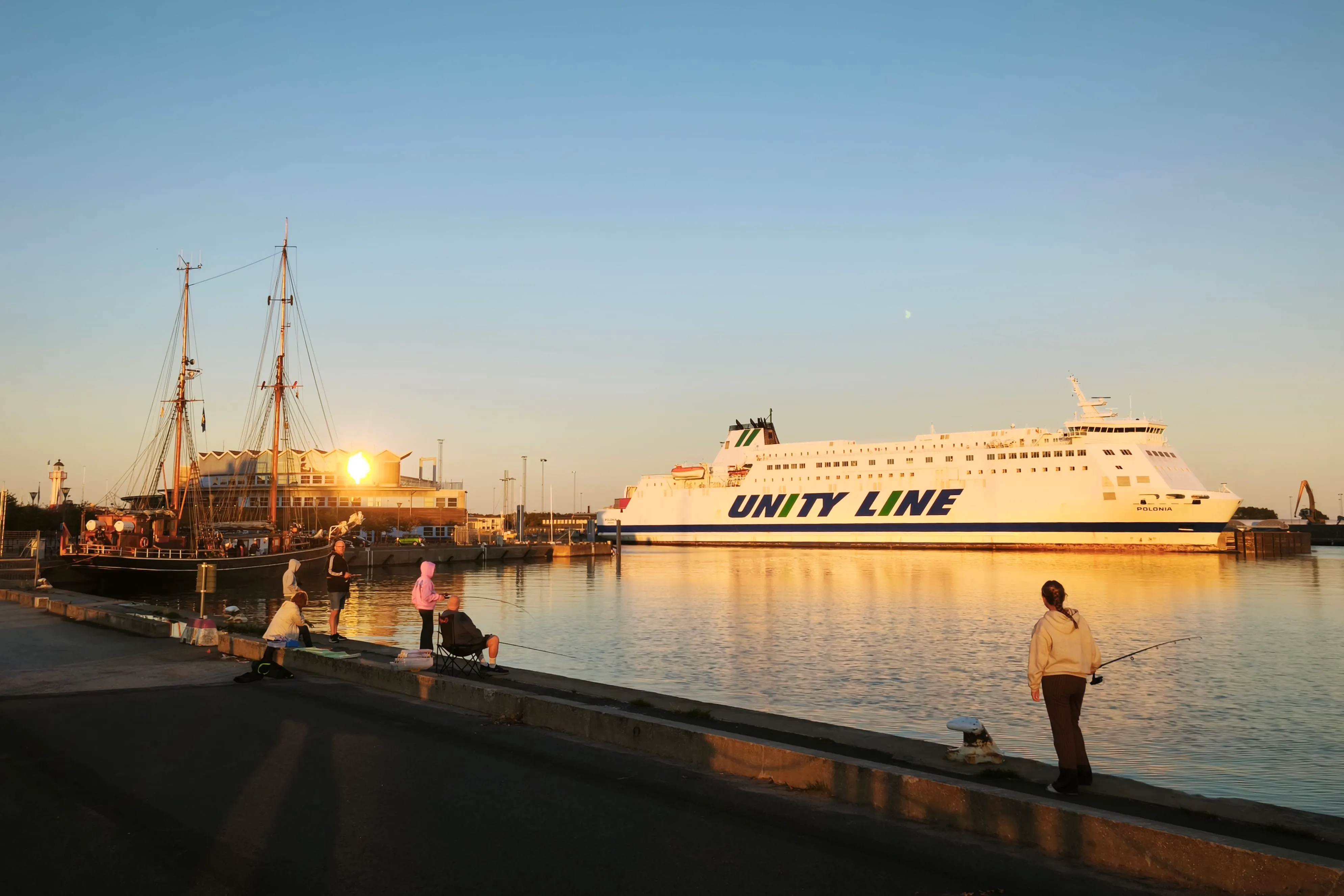
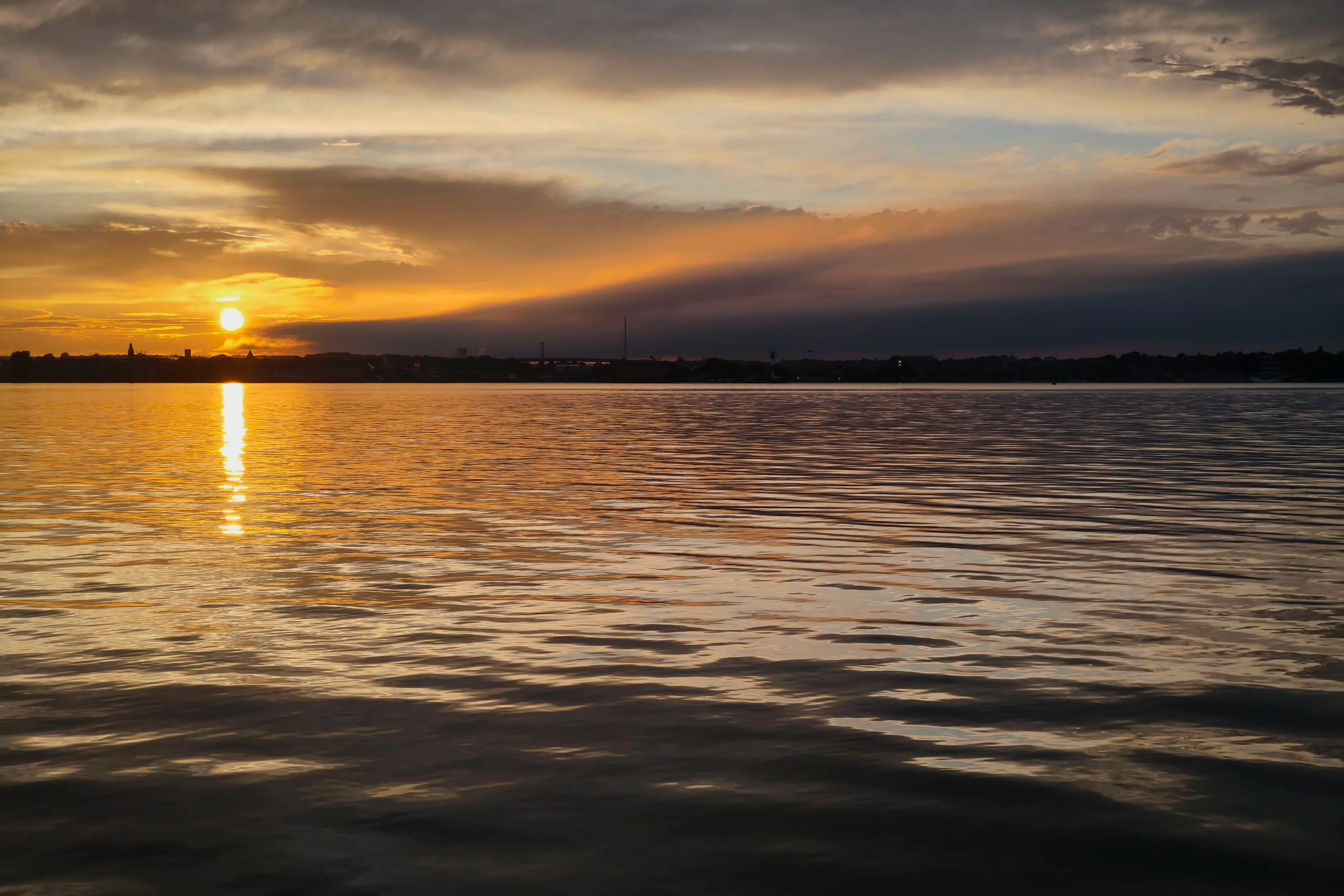
Here comes the sun
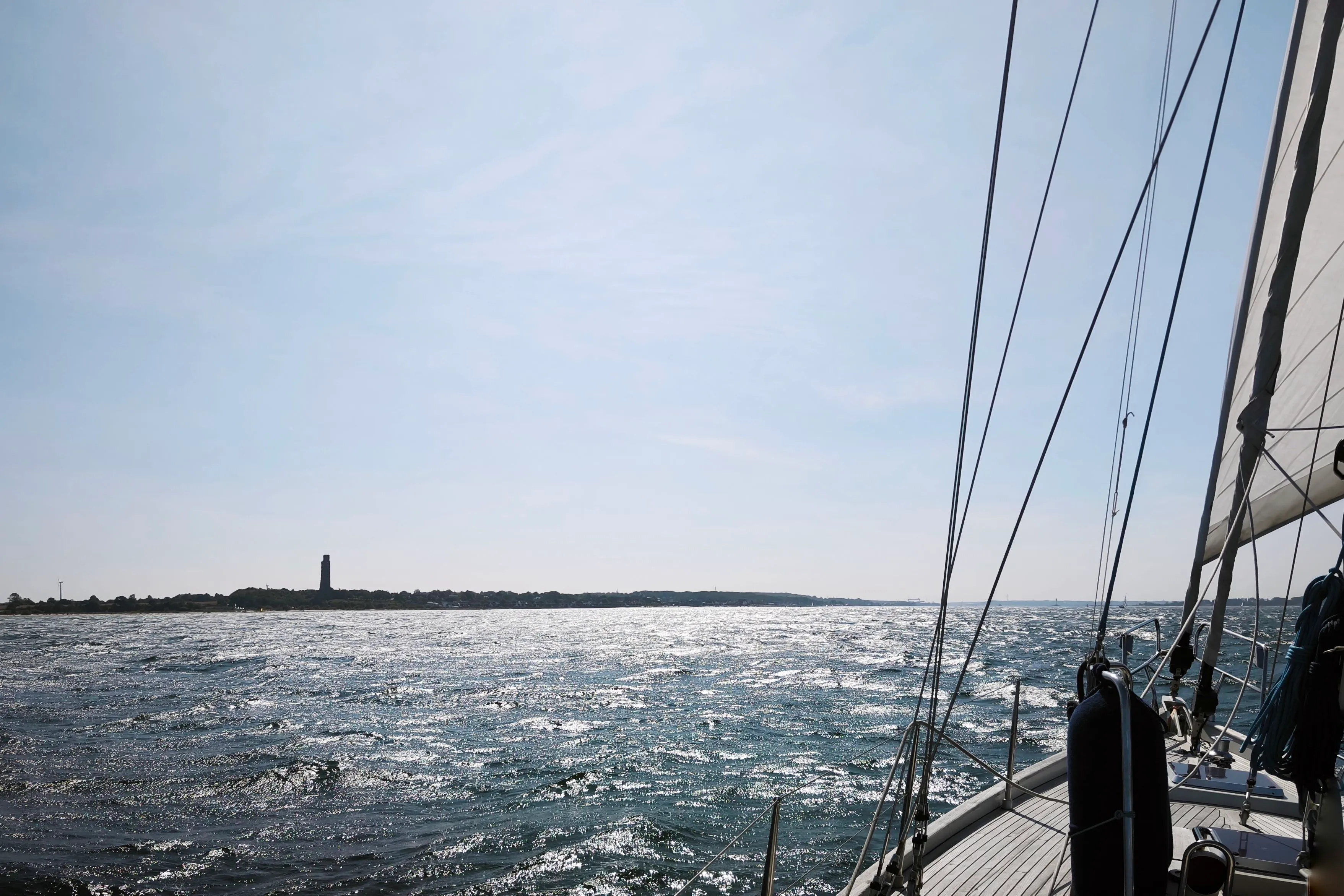
What followed was not pretty. Wind and waves from astern caused wild rolling; dishes clattered, books tipped over, my mood with them. At one in the afternoon, I had Kiel lighthouse to starboard. To port, the Laboe Naval Memorial gave a long goodbye to the sailors lost at sea in war and peace. I entered the Kieler Förde. Here, the wind increased to twenty-six knots, a cape effect. I worried about the light glassfibre boats carrying too much sail, overtaking me while struggling to maintain course. And I worried about mooring under these conditions – the most difficult part for a solo sailor.
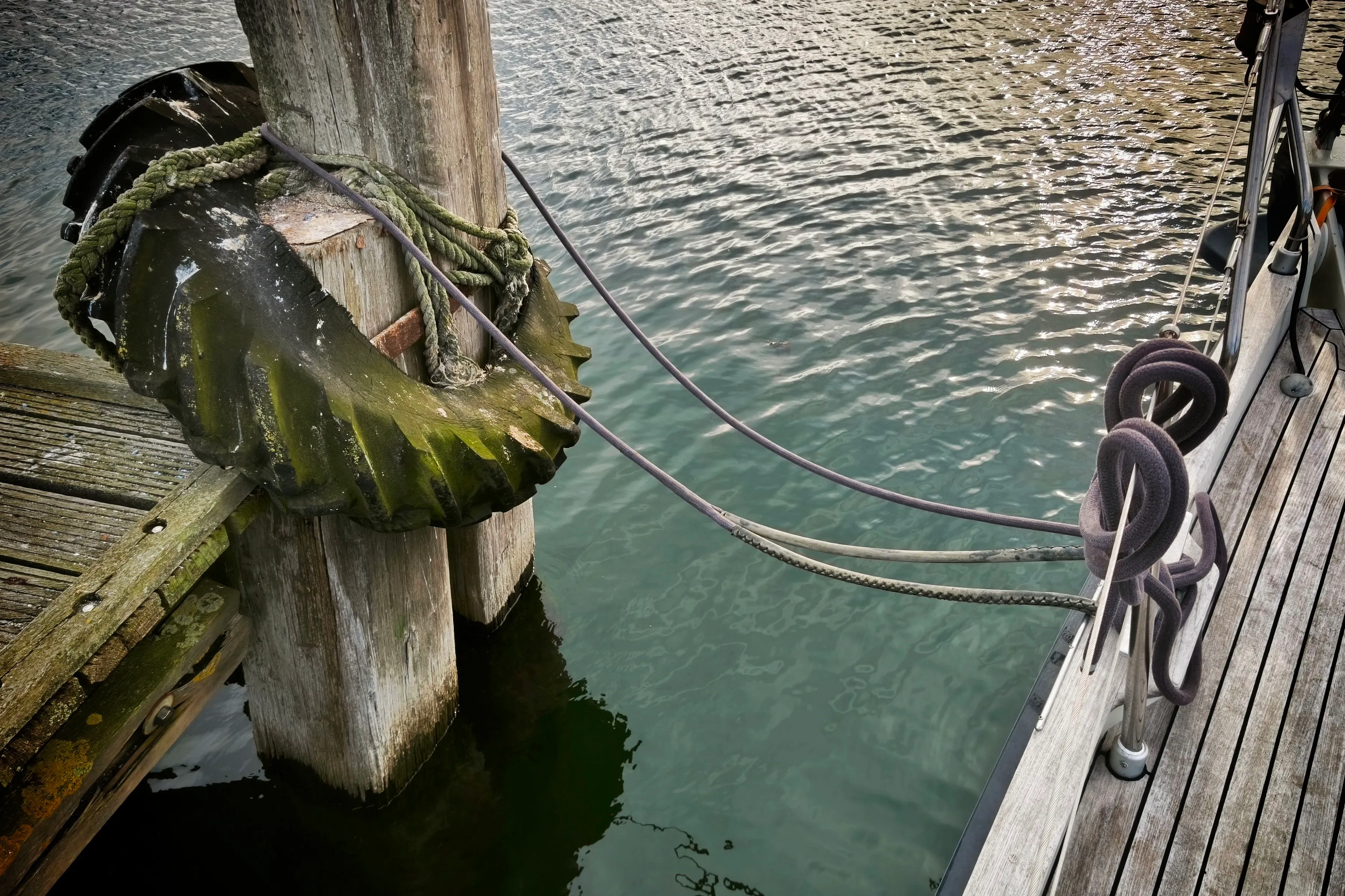
Finding a free spot in a marina always seems difficult in Kiel. In Möltenort, all empty boxes showed a red sign: occupied. Tired after 159 miles and thirty hours, I moored at a wooden jetty in the Fischereihafen, hoping that the harbourmaster would let me stay there overnight. He kindly agreed. After a night’s sleep – and missing out on the Fischbrötchen offered nearby, I proceeded to Mönkeberg and slid into the last empty box with a green sign – and an open view over the Förde.
In the evening, the promised thunderstorm arrived with heavy rain and I was glad not to be underway. Had I daysailed from Sweden instead of sailing overnight, I would still be out there. After the rain came a sunset reflected in the water of the Kieler Förde – seen from Coelacanth’s front-row berth.
Footnotes
-
Two weeks later, Denmark protested after a Russian warship fired flares at military helicopter in the international waters near Gedser. ↩