Åland and Turku archipelago
We had hoped for a fair wind and we got it: the southerly wind increased to force five and Coelacanth accelerated to seven knots. For a few hours there was nothing but an empty horizon and flying spray. In the Odyssey, Aeolus is the master of winds who gives Odysseus a bag of wind. Now that we were on our way to Finland, the Kalevala became the reference. The first Rune describes how the wind acts on its own and impregnates Ilmatar with Wainamoinen (from Lönnrot’s Kalevala published in 1835, cited from Crawford’s 1898 translation):
“Thereupon the rising storm-wind
Flying from the East in fierceness,
Whips the ocean into surges,
Strikes the stars with sprays of ocean
Till the waves are white with fervor.”
Winds in the Kalevala serve no master but move freely through the world; they also carry wisdom like singers in their songs. No central authority directs them, and nature is not controlled or subjugated. It assumes a different cosmology, one in which nature governs itself. There is no bargaining with wind and weather.
Leaving Stockholm’s archipelago for Åland
Two days earlier we had walked through Stockholm’s Gamla Stan, taken an aperitif and then the ferry back to Djurgården, where Coelacanth was moored. The next morning, we left Stockholm’s Wasahamnen and passed Vaxholm and its 16th-century fortress. The fairway through the northern archipelago led us to Furusund. Mooring was difficult in the strong crosswind. On the outside of the pontoon, strong swell repeatedly smashed a small sailboat against the concrete. Her engine had failed, and we offered to tow them to the inside where the water was calm.
Furusund is a Swedish village as one imagines it; in a restaurant people in white and light blue linen ate dinner while a jazz band played until the sun set late. Astrid Lindgren had a summer house on the waterfront, and apparently once a steam ferry almost crashed into it.
The next day’s departure was uncertain when a weather warning about a potential thunderstorm appeared. After the rain had passed, we left and soon the Remmargrund lighthouse in the outer skerries appeared. The horizon opened and Stockholm’s northern archipelago lay behind us.
It was on the way to Mariehamn that we passed latitude 60° north. We were still six degrees short of the polar circle where the sun doesn’t set at the summer solstice – the midnight sun described first by Pytheas when he sailed northwards to the most northerly location Ultima Thule. Still, there was always a glow in the northern sky at night when I awoke and peeked out of the decklight – not an aurora as in Uuno Klami’s Revontulet – but the light of the sun on the Earth’s other side.
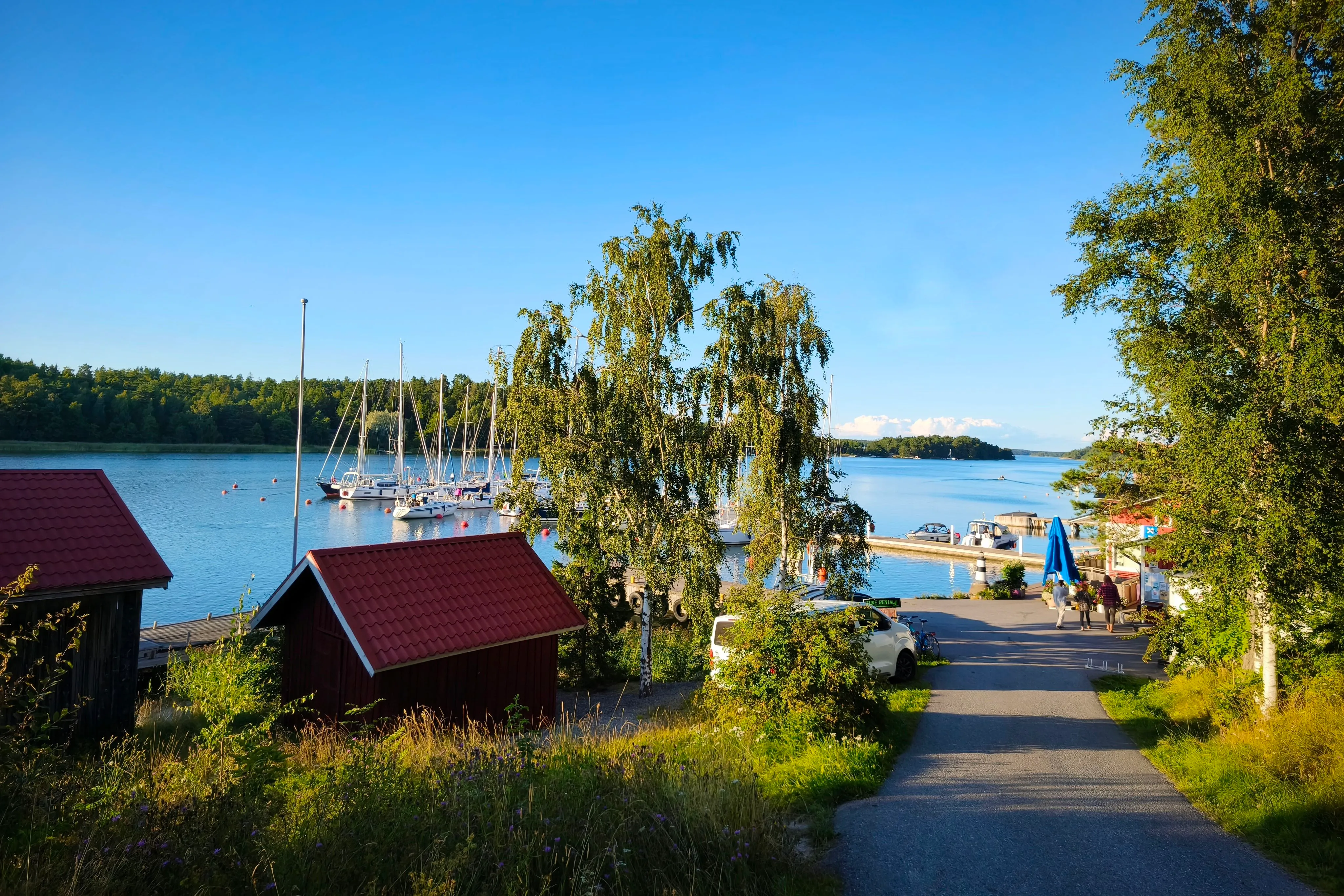
The faint silhouette of the Åland islands appeared with the Marhällan lighthouse marking the long and protected entry channel to Mariehamn. We moored in the west harbour and settled into the relaxed atmosphere. There were fewer sailboats now. People were having dinner on the restaurant’s veranda. Men with nothing but a towel around their waists were sitting in front of the sauna hut with a beer in hand, their skin rosy.
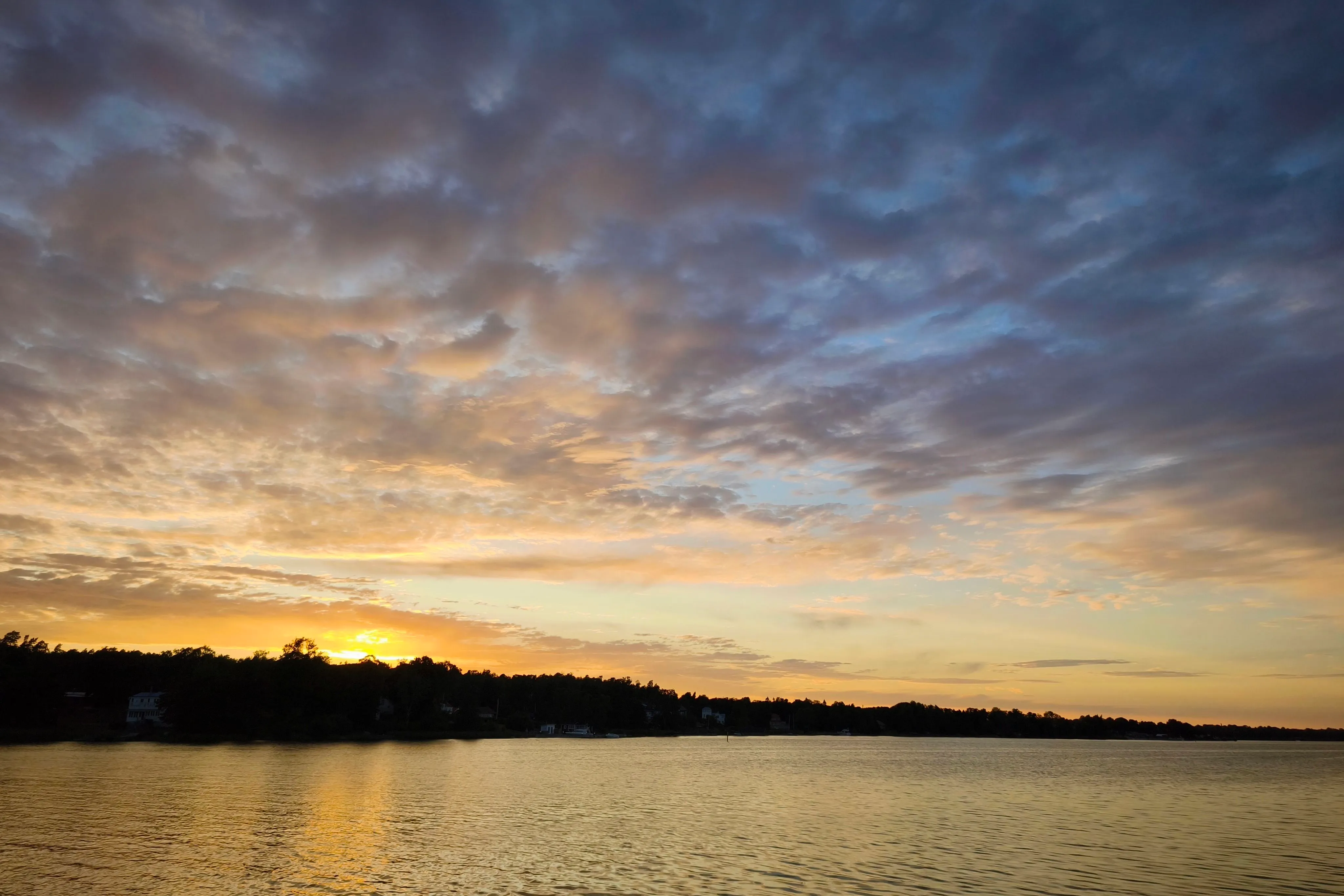
The sun goes down in Mariehamn, Åland.
Löyly or: When in Rome, do as the Romans do
It’s no secret that the people of Finland are sauna aficionados. There’s a website listing all Finnish harbours with sauna availability. Nevertheless, I was surprised and impressed by the sauna infrastructure and the ritual around it.
The tradition is very old and appears already in the Kalevala, where the löyly – the steam created by throwing water on hot stones – was held to have curative and even spiritual power. When a hero arrives at a house he is offered food and drink, a place to sleep, and the sauna. Louhi receives Wainamoinen in Pohjola in exactly that order.
Thus we dropped our restraint, followed Finnish tradition and went to the sauna in Degerby, the second harbour we called at after Mariehamn. A tubby old man with a long beard and ice-blue eyes had helped us moor that afternoon. He was already on the bench when we came in. Akseli Gallen-Kallela painted Wainamoinen as an old white-bearded man, and sitting there in the heat, he could have been the model.
The swimming mooring technique
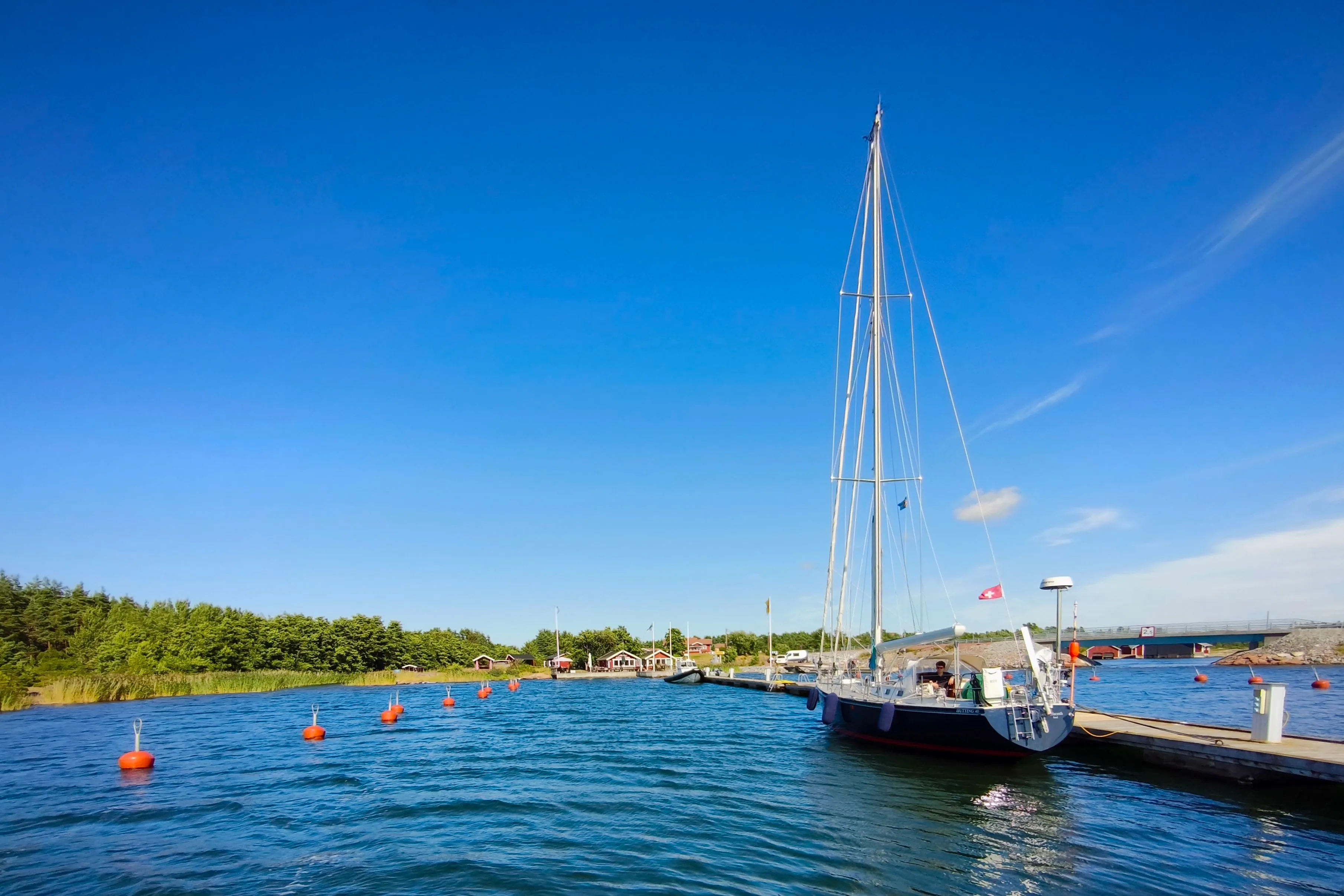
We had a ritual of our own that complemented the sauna nicely: Coelacanth isn’t that easy to manoeuvre backwards, especially to starboard due to prop walk, so we developed our own mooring technique. We had first tried it in Mariehamn, when the technique had not evolved to its final finesse yet. We had chosen a mooring spot next to a Finnish boat, and when we tried to catch the stern buoy with the boat hook, the hook slipped out of our hands and dropped into the water. This led to some concern on the Finnish side and precautionary placement of additional fenders. On the second try, we managed to catch the buoy, but unhappily our line was too short – preventing us from reaching land. We thus had to replace the short line with a longer one; and that was how the swimming technique emerged: after securing lines temporarily, one of us would swim with a line to the stern buoy to attach it there. In the end, we earned amused looks and admiration for the dedication that replaced steering skills.
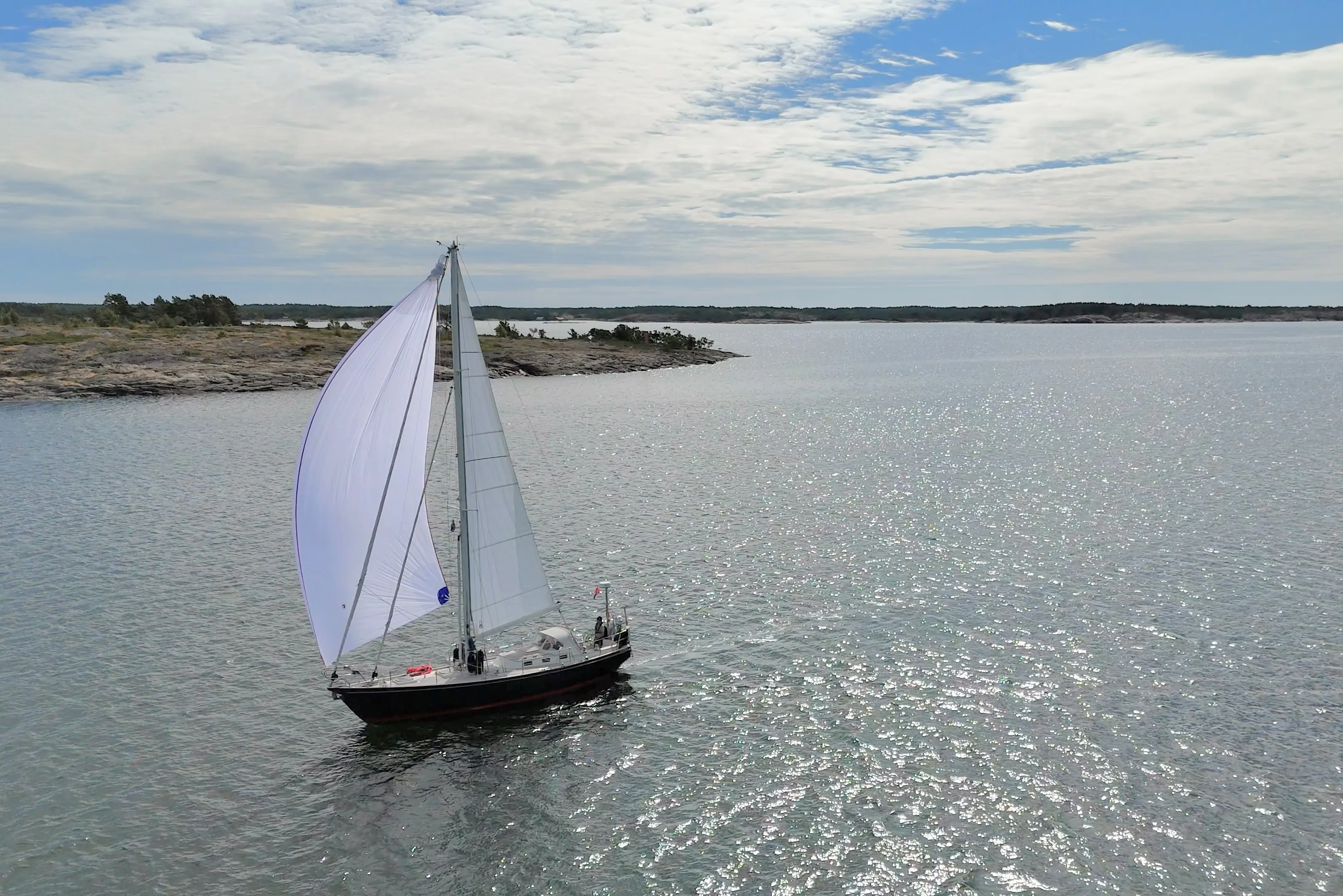
Coelacanth sails under gennaker in the skerries of the Åland islands.
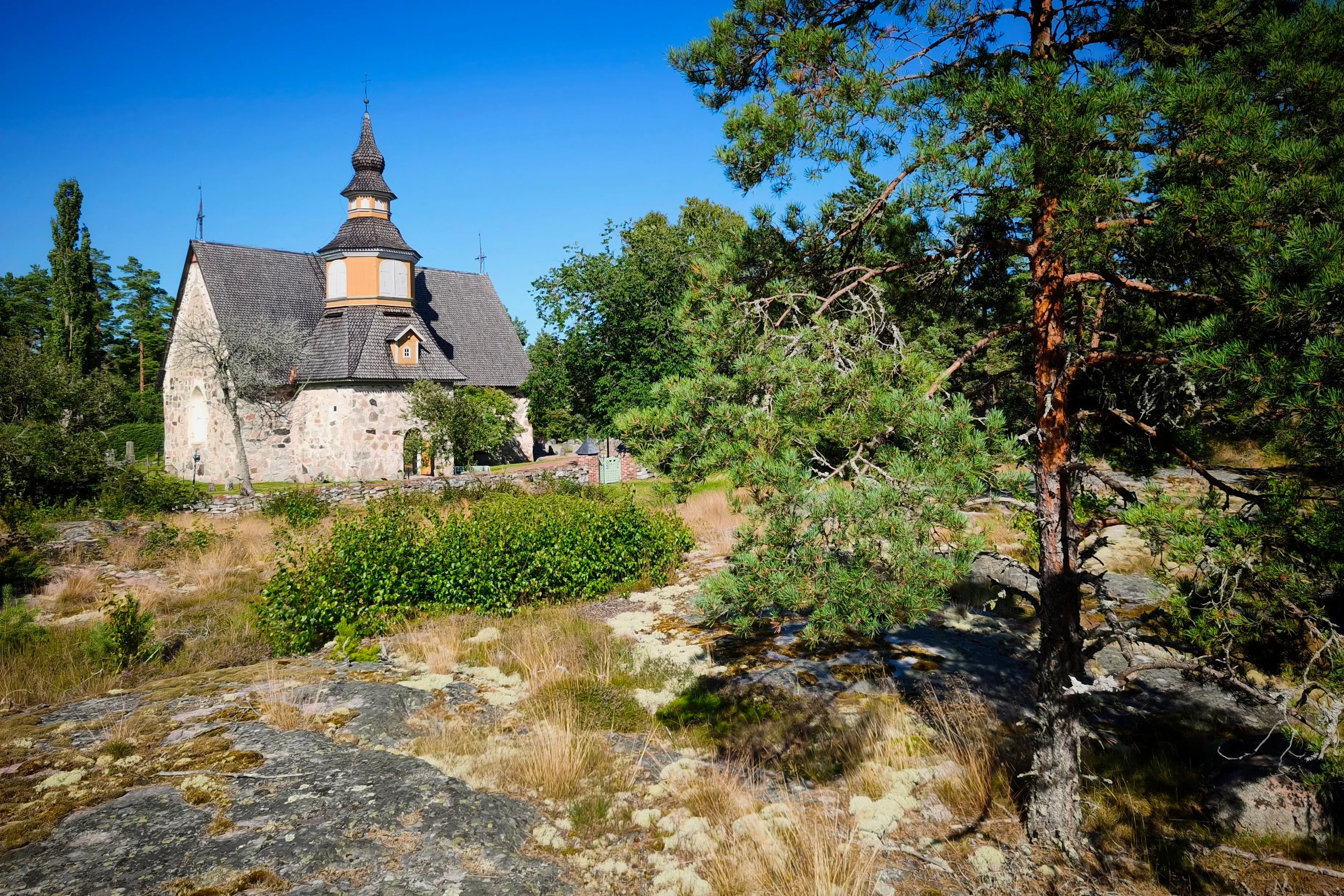
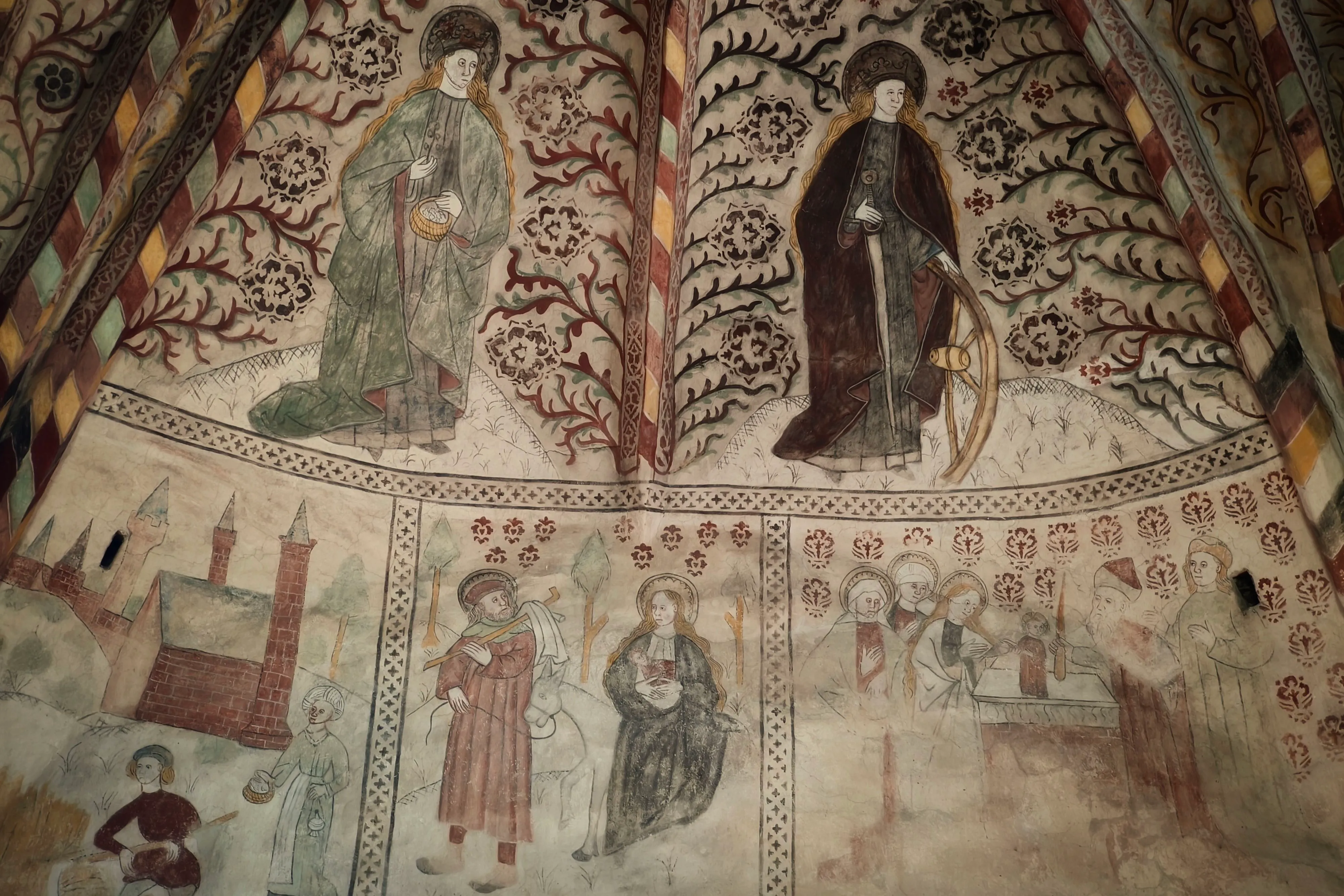
We continued to Kumlinge and were the only sailing yacht in the quiet harbour. From the harbour, there is an overgrown footpath leading through forest and bare rock to Sankta Anna church. We were a bit wary of the warnings about snakes on Åland, and the hike could have been swifter, had we not made a little detour around a rock or two that looked suspicious. Relieved to have been spared by the reptiles this time, we entered the church that holds mural paintings from around 1500, when Finland was still part of the Kalmar Union. The chalk paintings depict scenes from Mary’s life and from Christ’s childhood, and female saints.
Back at the harbour, it was sauna time. Towels around our waists, we sat in front of the hut with a beer in hand, our skin rosy.
The Turku archipelago
From Kumlinge, we continued eastwards into the Turku archipelago. Näsby is a guest harbour in a protected bay of the island of Houtskari. Swedish is still the common language here, but most of the boats we saw flew the Finnish flag.
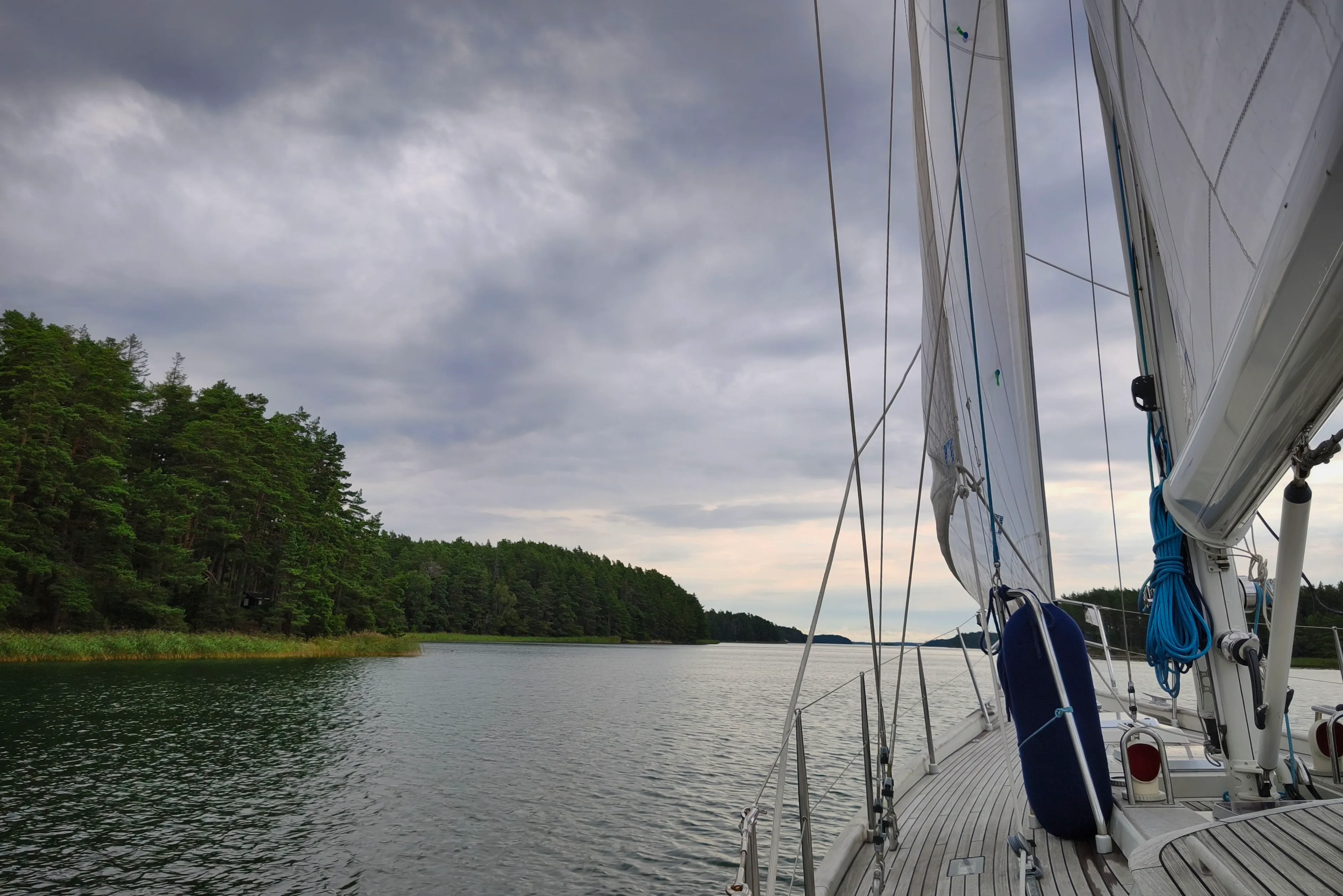
When we left Houtskari in the morning and quietly sailed through the narrow waters between high forest, a swan appeared and I could have sworn I heard, faintly, the cor anglais of Sibelius’ The Swan of Tuonela. The dark river of Tuonela encircles the underworld, and a swan swims on it, singing. Melancholy mixed with awe at the beauty of this landscape – this was the farthest east we would come. Tuonela would not be crossed. From here, every course we set would be a course back.
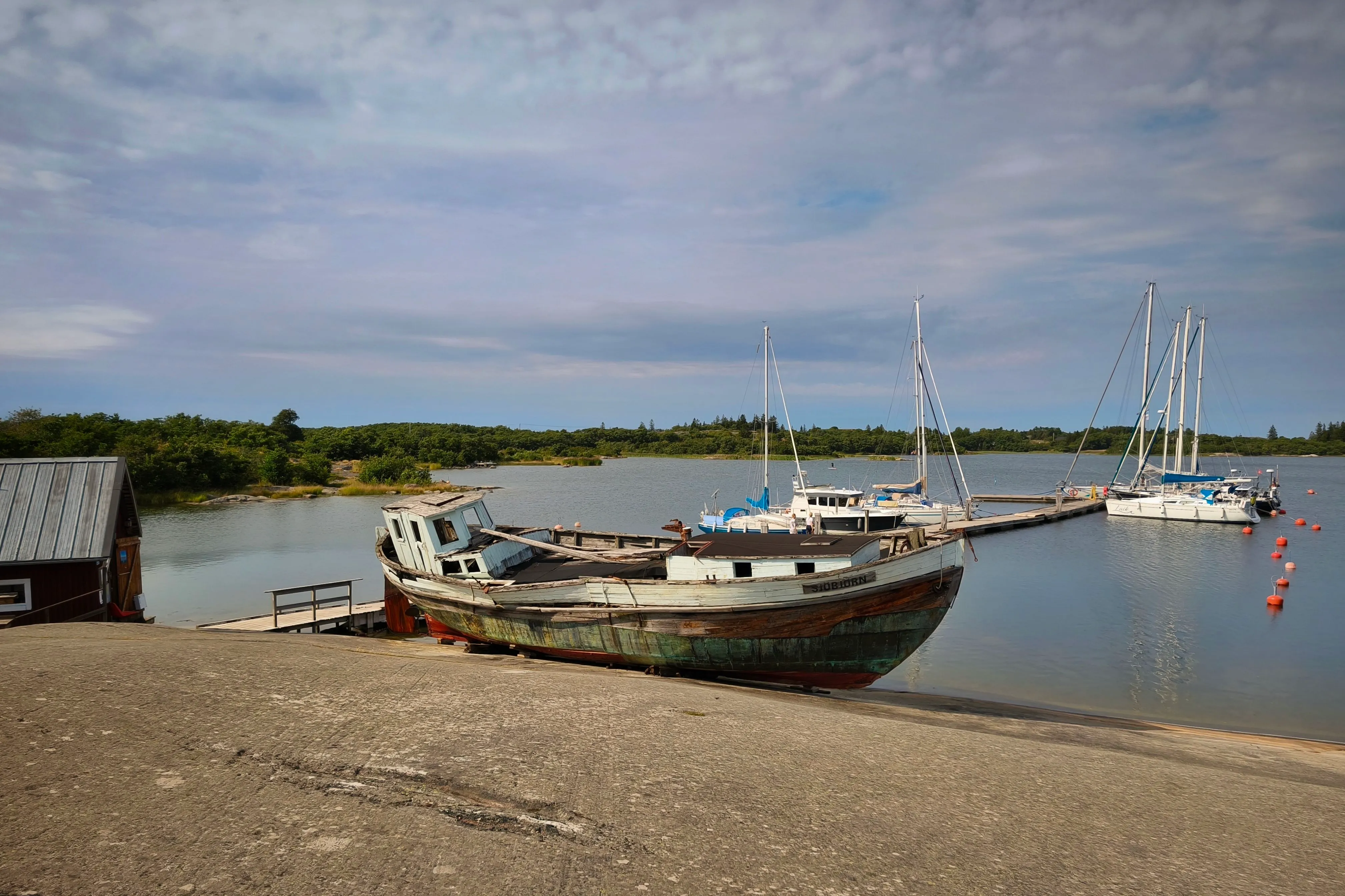
Now heading to the south and west, we reached the open waters between the islands. The wind picked up and Coelacanth raced back into Åland waters to the old harbour at Sandvik in Kökar. Here, several Estonian sailboats were already moored, and a skipper told me they had arrived after an overnight sail – Tallinn is only about 100 miles away. They had come from the east, from further than we had sailed. The wind that had carried us here would carry us back when the time came, serving no master in either direction.