To the Baltic
It had been a leaden last month and June had finally arrived. After a night in the sleeper train from Basel, another train, and a bus ride, we found ourselves in the quiet of Friesland and its open skies.
Coelacanth sailed through the Wadden Sea to the West Frisian Islands and we took on the last provisions. An occlusion front with heavy rain and wind passed, then we headed out from Terschelling through the Stortemelk, which honoured its name with steep wind-against-tide waves. We turned eastwards and passed the chain of Dutch and German Frisian islands. One lighthouse after another flashed its signal into the night.
Two hours before high water, exactly as planned, we arrived at Otzumer Balje and turned into the narrow approach to Spiekeroog, the prettiest of the German Frisian islands. The harbour was quiet at this early hour.
Into the river Elbe and the Kiel canal
A week of serial low-pressure systems brought rain and sunshine in rapid succession. We continued towards the Kiel canal. In the Elbe estuary, dark rain clouds lurked on the horizon. It soon became obvious that the forecast of westerly winds at force 4 to 5 had understated the conditions: the actual wind was Beaufort 7 to 8. Under the small jib we raced along the sands, Scharhörn and Neuwerk passing to starboard. I remembered the passage in The Riddle of the Sands where Davies and his Dulcibella were lured onto these banks and nearly wrecked. Then, at last, Cuxhaven appeared. The mooring manoeuvre wasn’t the prettiest, but it worked, with international help from the neighbouring boats. These harbours of transition are the most interesting ones. There was a Swedish boat bound for the tropics, a Dutch crew longing for calmer waters where the tides no longer dictate when to sail, the melodic Finnish banter that sounded almost like trochaic rhyme, and the ever-optimistic Brits, who refused to let a botched manoeuvre get them down.
The weather was still refusing summer. Heavy showers on the Elbe obscured a dredger and the freighters anchored in front of the locks; the radio crackled with a message about a leisure boat with engine problems in need of a tow.
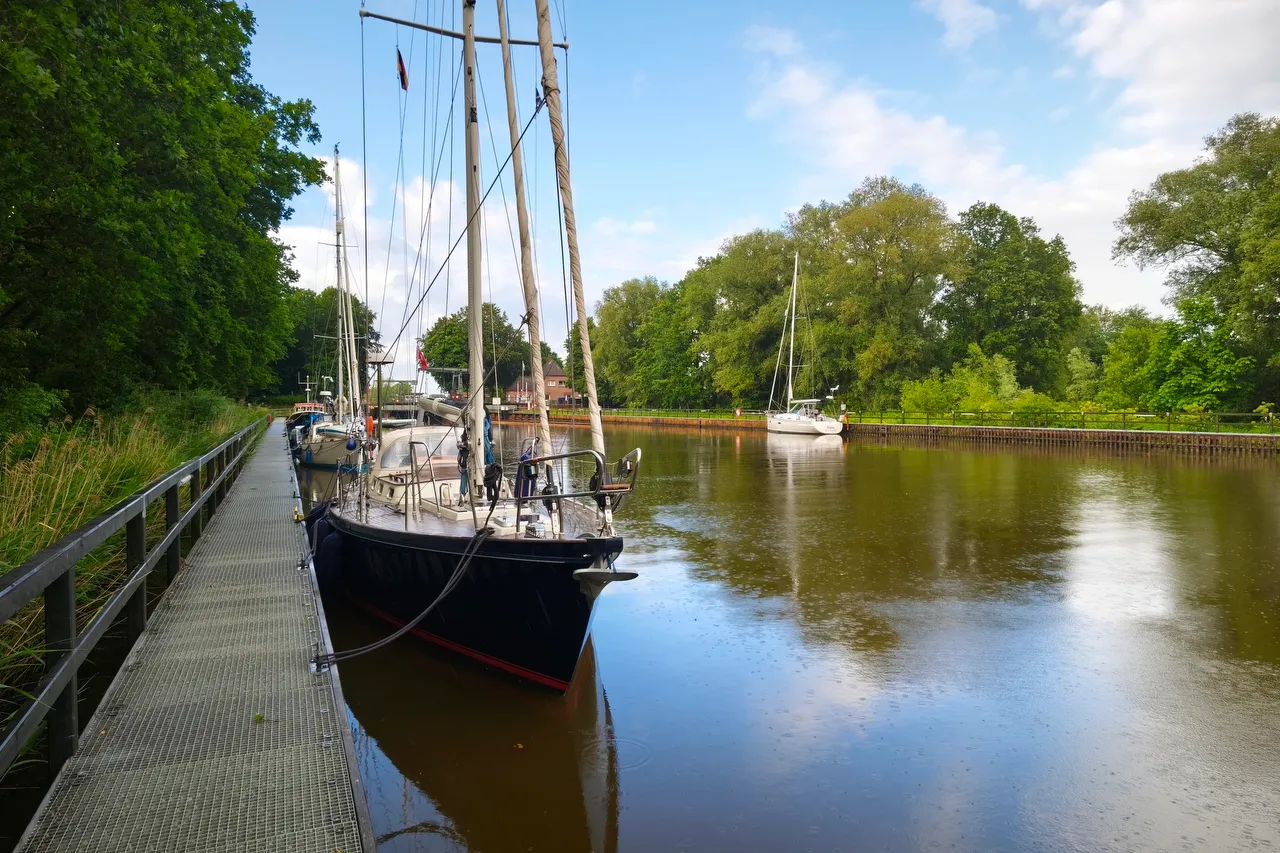
We entered the lock of the Kiel canal in Brunsbüttel. The old floating wooden pontoons danced up and down in the turbulent water; their eyelets (not cleats over which you can lasso a line) forced us to jump from the boat to secure the mooring lines. Behind us, a search-and-rescue vessel towed the disabled boat with a scared family on board. The boat’s name Fortuna was probably changed to Felicitas after this experience.
We motored along the Kiel canal, the legacy of Emperor Wilhelm II, an ambitious regatta sailor, and spent the night at the mouth of the river Eider in Gieselau, serenaded by a cuckoo. The lock in Holtenau opened its gate to the Baltic, and we sailed the last two miles to Düsternbrook, the upscale neighbourhood of Kiel. Hunting for an empty berth, we slipped past a long, low yawl with a wooden deckhouse and teak deck: the Sparkman & Stephens-designed Germania VI. Hers was the sixth name in a line that ran back to the Kaiserzeit. The first Germania, a 1908 schooner that Bertha Krupp had given her husband Gustav as a wedding present, took Cowes Week that summer in record time; yet whenever the schooner met Wilhelm II’s Meteor, Krupp reputedly took care not to outsail the Kaiser and stayed a few seconds behind.
We developed an easy system for scoring a marina’s hospitality. Expect no help finding an empty berth or securing mooring lines if one or more of the following apply (in ascending order of significance):
- Water is non-tidal.
- Marina is in a major city, near the centre.
- It is the weekend, and ambitious regatta sailors with Musto gloves, shoes, and bags seize the docks.
- Marina is home to a yacht club and proud of its history of royal patronage. Double points if the sailing emperor had to abdicate.
The next leg crossed the Kieler Bucht to Danish waters. The new gennaker proved its worth, but even this huge sail would not fill in under five knots of wind. A German warship – sadly not named Blitz like in The Riddle of the Sands – radioed a warning about a gunnery exercise, which was soon audible from more than ten miles away.
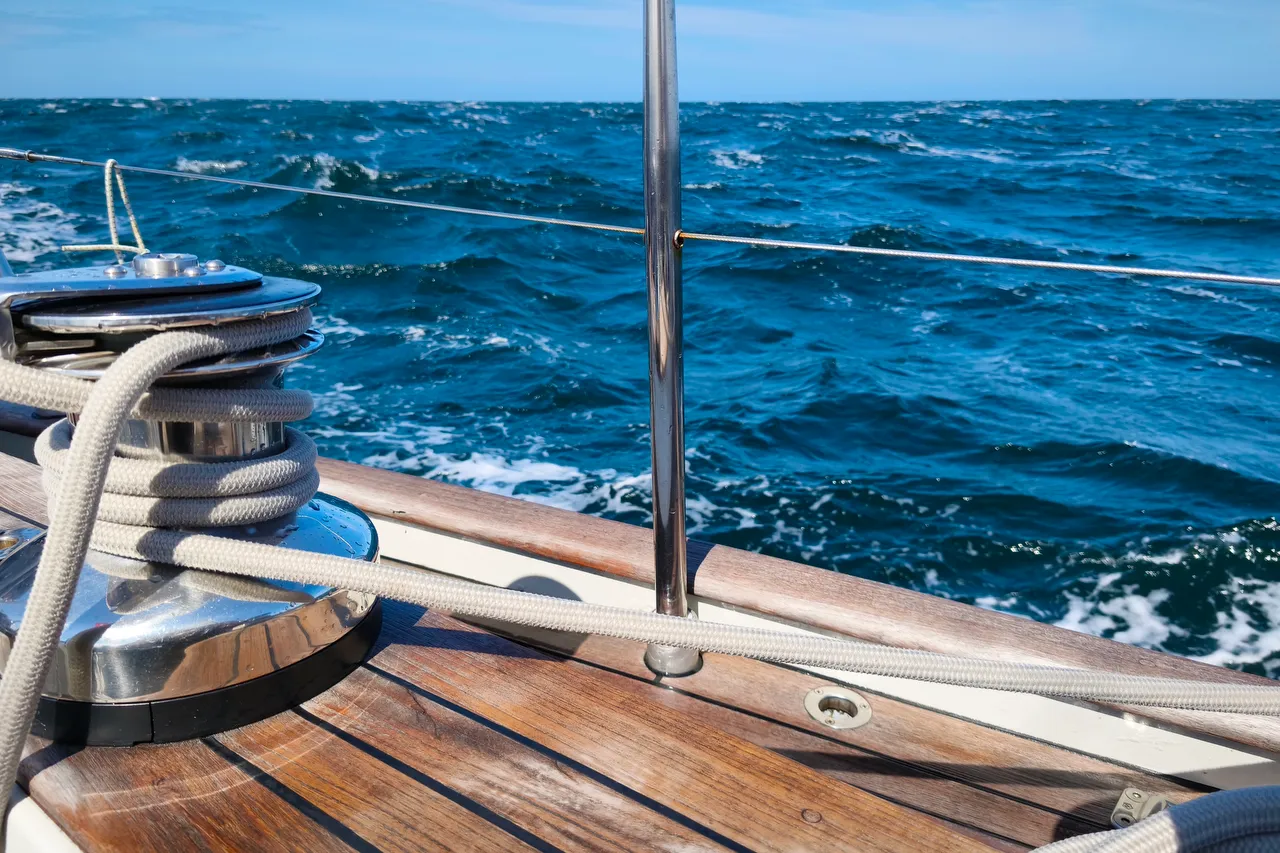
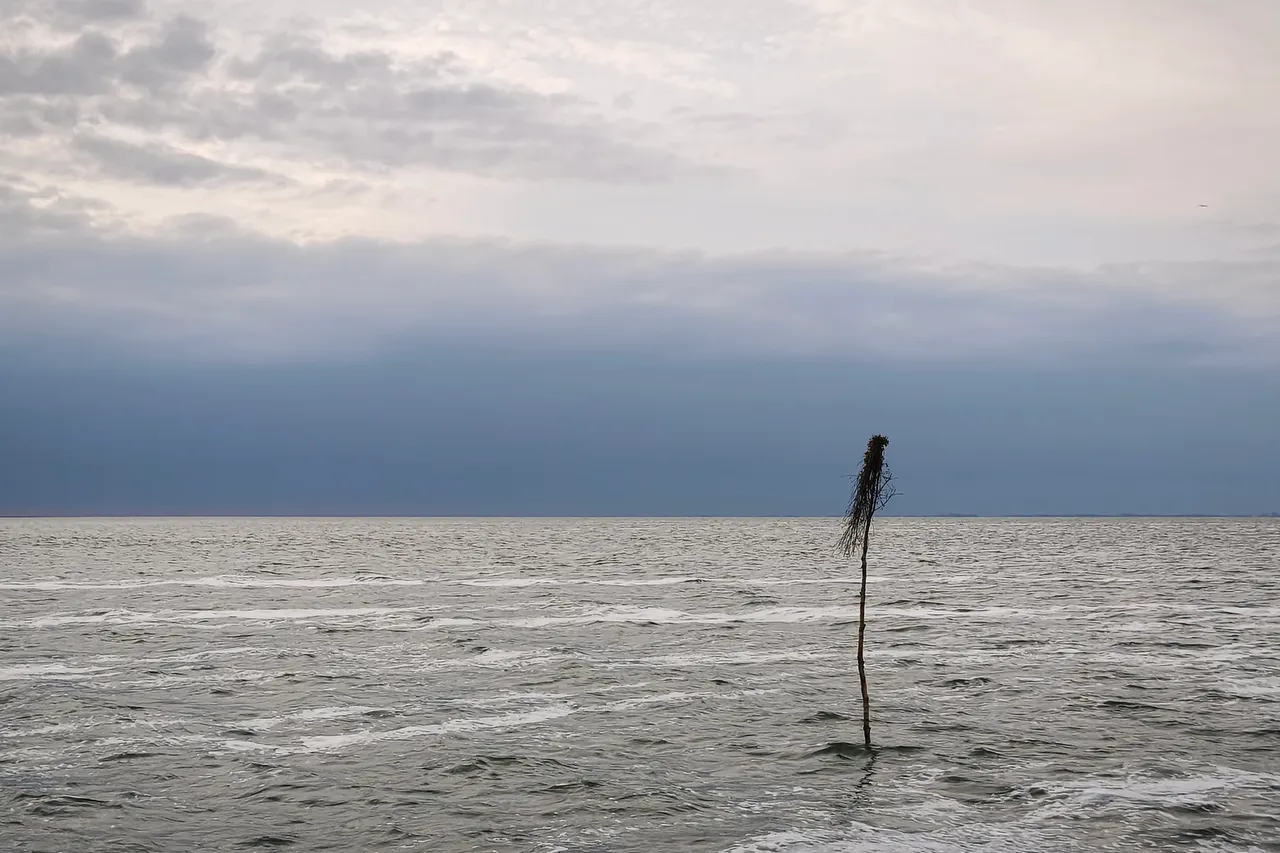
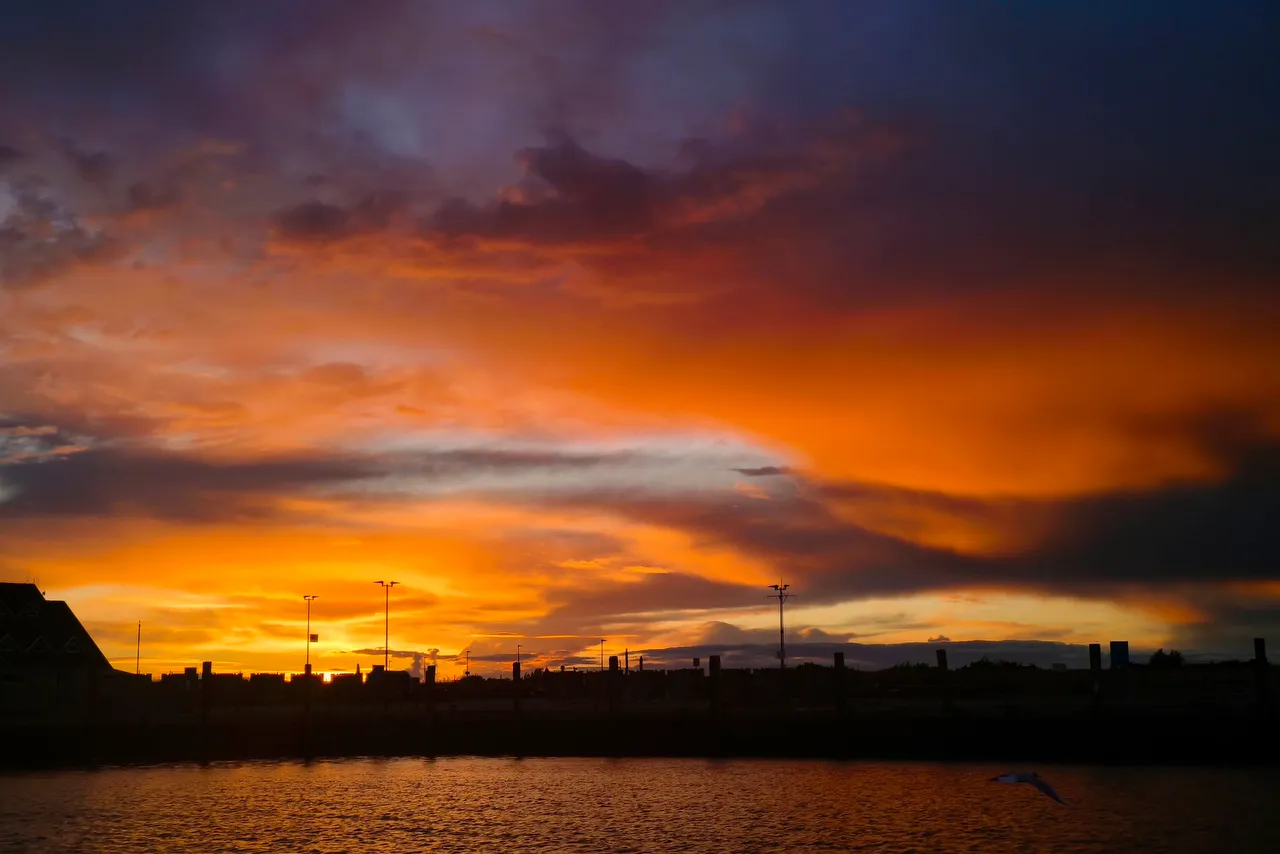
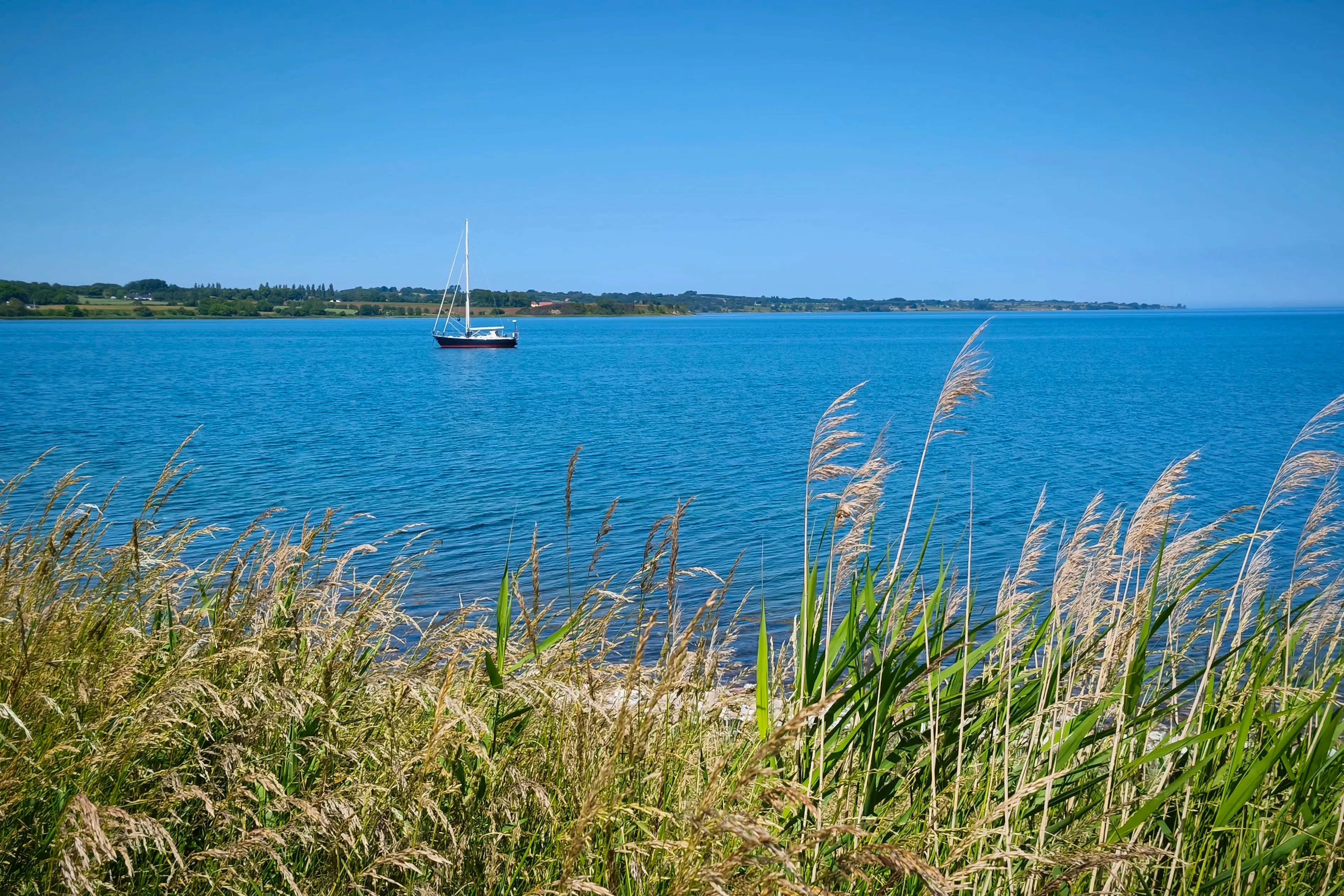
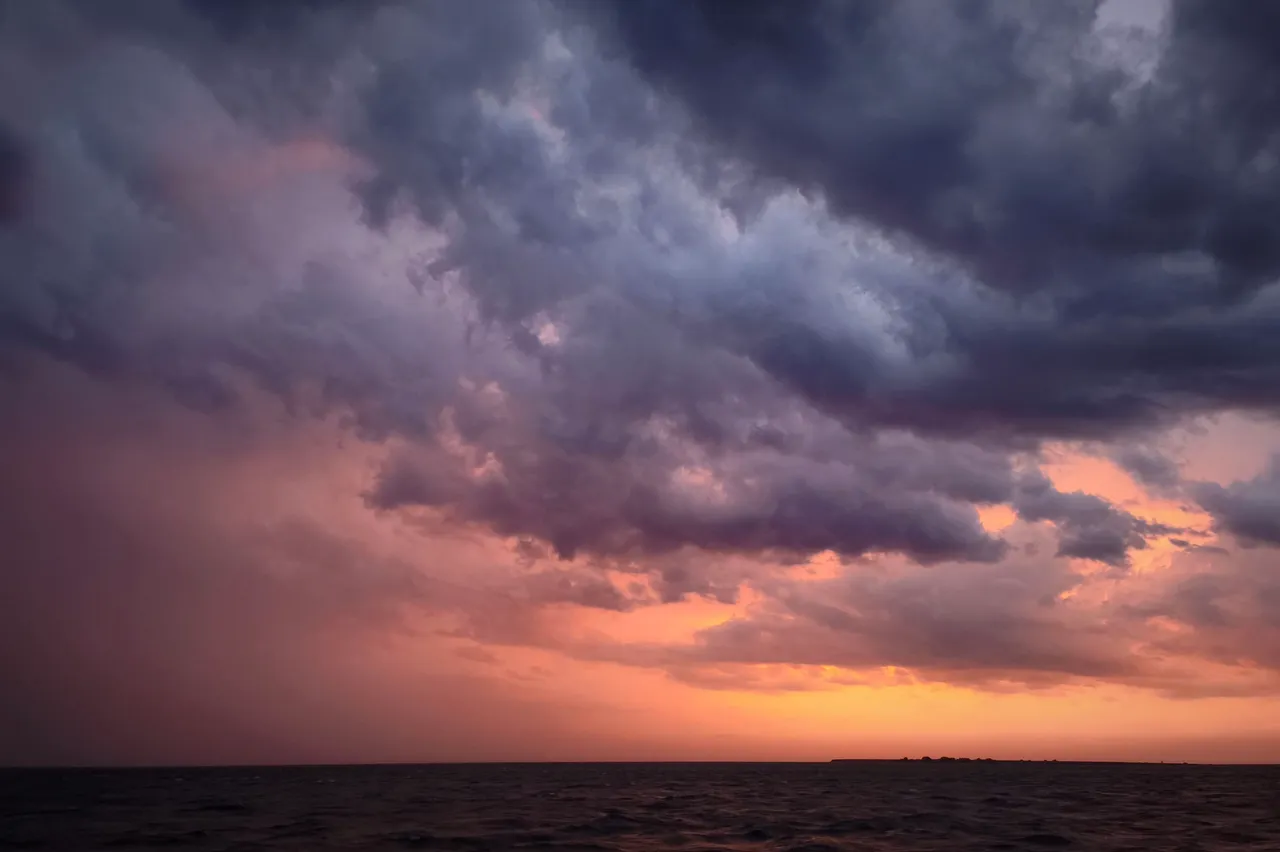
A thunderstorm at anchor in Denmark
The harbour of Bagenkop on Langeland still had ample free space. The crews of two sailboats were repeatedly practising their mooring. One of them was a training ship of the German navy, a 1971 Morgan 54 sloop. The other was crewed by elderly German gentlemen; their shouted commands were louder than the Bundeswehr’s.
Europe was under high-pressure influence, not only politically, but also weather-wise. While I lay anchored in a bight of the island of Ærø, the rising wind woke me at four in the morning. The first thing I noticed when getting into the cockpit was the intense smell in the air: a briny, musty, slightly decayed odour of seaweed, probably sulphides produced by marine bacteria and phytoplankton as they decompose organic matter. Theophrastus would almost certainly have catalogued this had he spent time at sea.
Within minutes, the wind had turned and reached thirty knots. Lightning forked from cloud to ground. I started the engine, but the anchor held. The strikes passed close by on my right. After ninety minutes, the air was clear. What, the morning before, I had felt as a thick, muggy, capped warmth had been the sky loading itself: heat and moisture stacked under a lid until something knocked it loose – the day’s own heat, a jet, a seam in the air. Some days later, I would see the destruction the thunderstorm had caused in the marina at Egernsund, where waves had slammed a boat onto the pier.
I crossed the Little Belt and entered the Flensborg Fjord. On a Sunday afternoon, with sunshine and white sails on calm water, it looked like a Swiss lake and reminded me once again of the days before this journey. The marina near Flensburg was busy with weekenders, but calm the next morning. Laundry day.