Through belts, sounds, and fjords
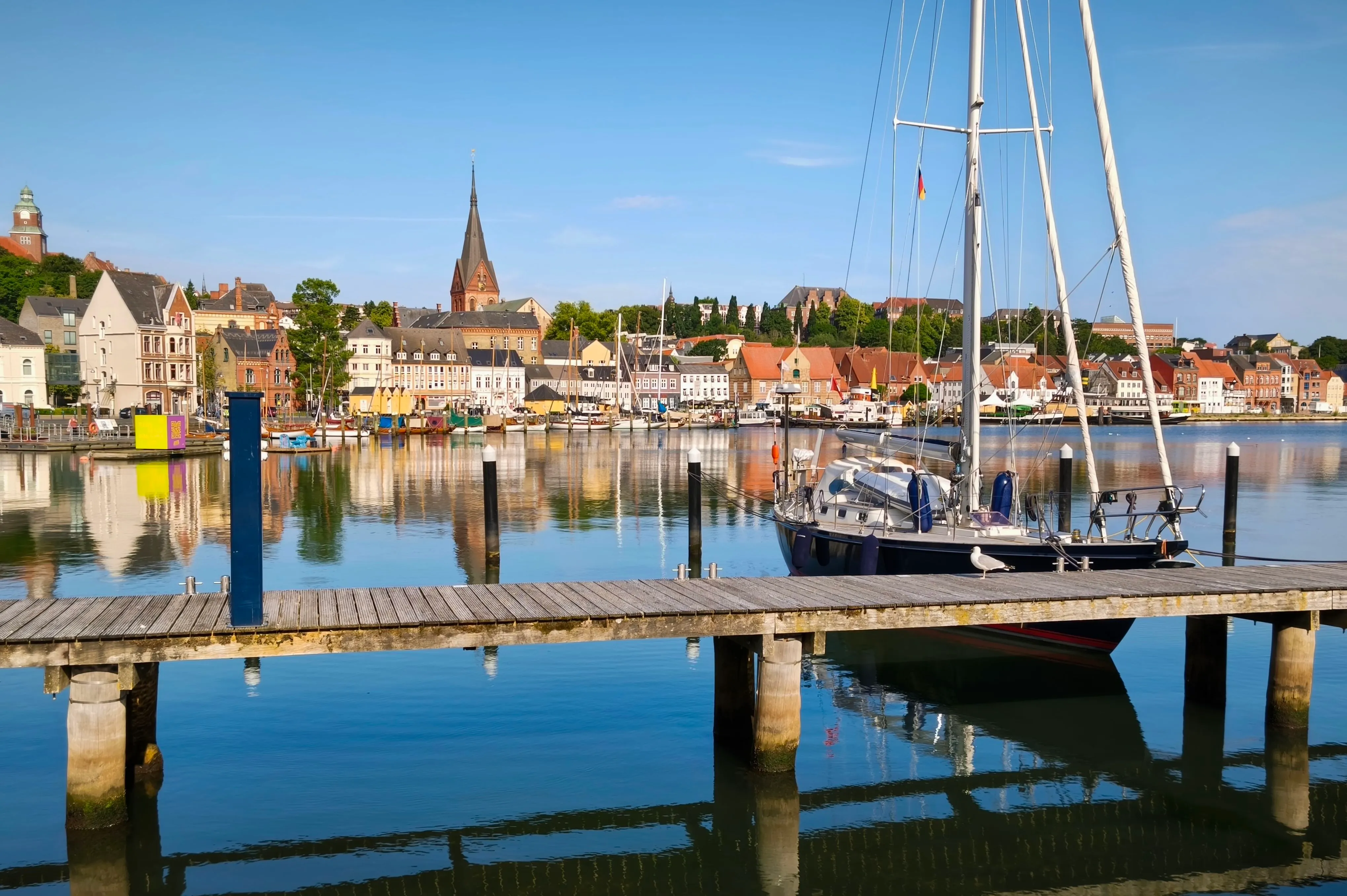
We left Flensburg’s Stadthafen after stocking up on Flensburger swing-top bottles. In the faint breeze of the fjord, we set the gennaker. The further we sailed, the more wind filled the sail; at force 4, Coelacanth accelerated to over seven knots and the huge sail suddenly felt too adventurous. Striking the sail, however, is even more scary; the sheet’s power and the rattling cloth are terrifying in higher wind. Earlier experience reminded us of the trick of taking down the gennaker behind the yankee sail to make the manoeuvre calm.
Anchoring in the Flensburg Fjord
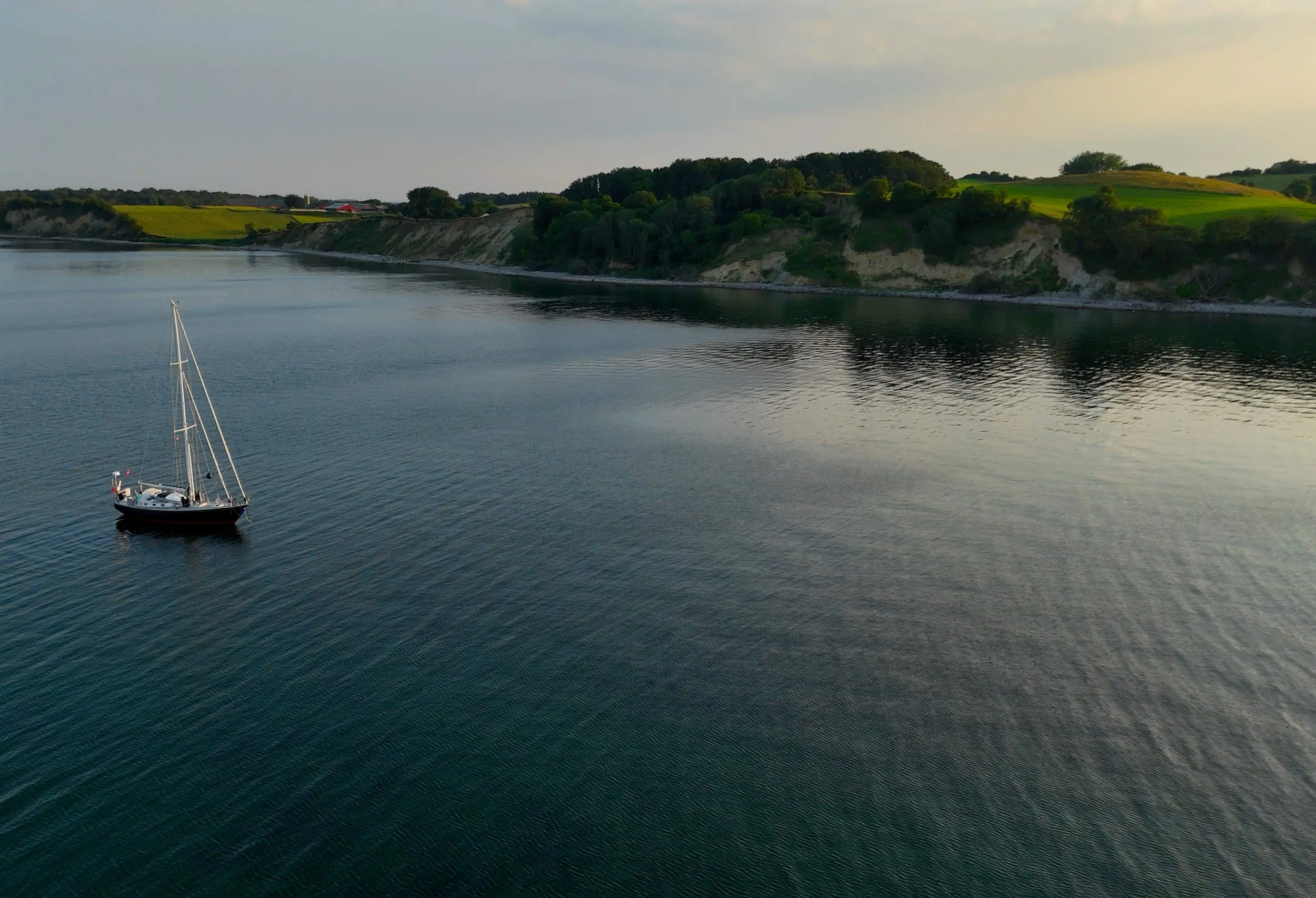
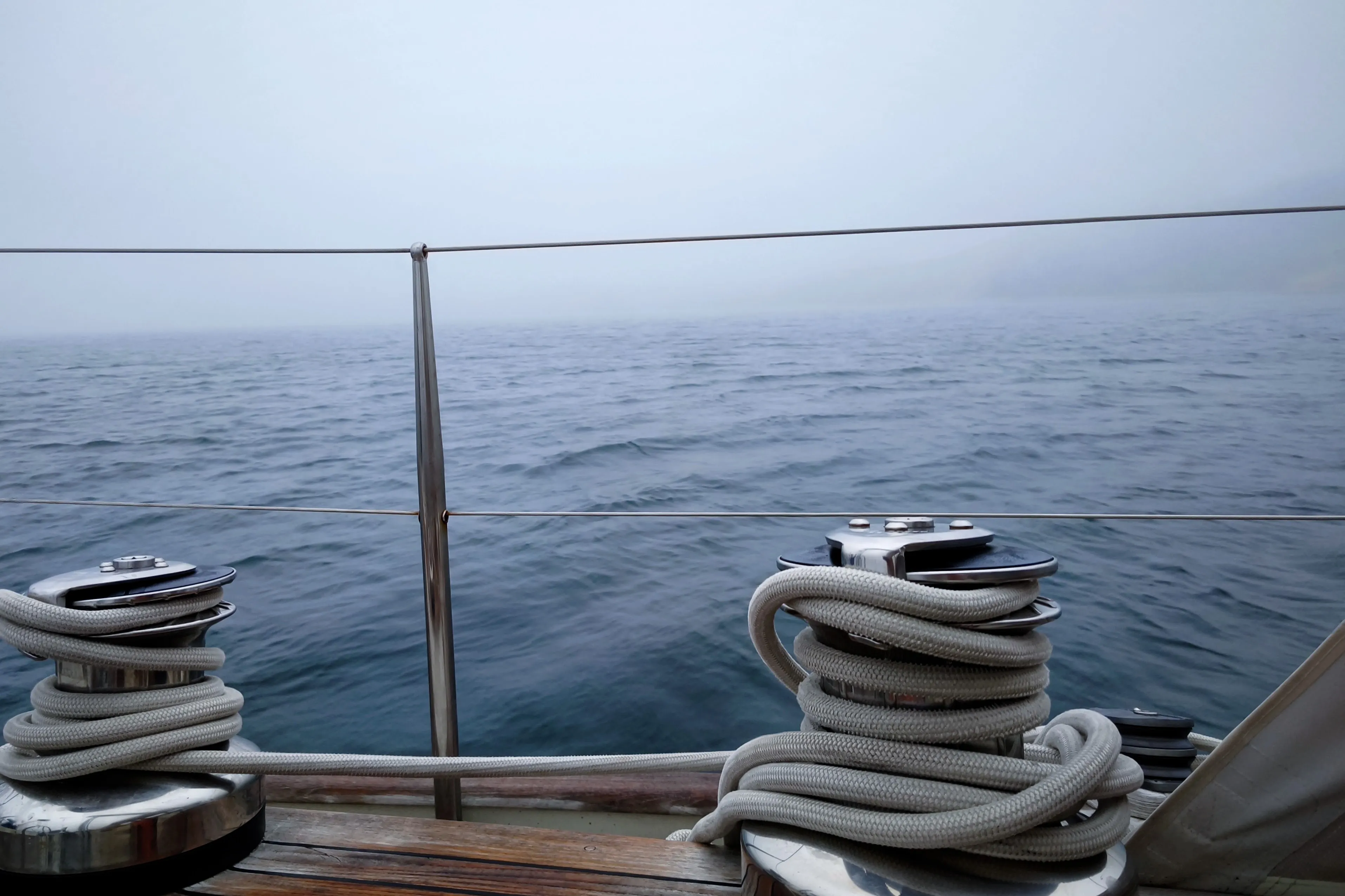
Like in The Riddle of the Sands, after Davies picked Carruthers up from Flensburg’s train station, we dropped the anchor near Sønderborg. The water was clear to the ground. Jellyfish hovered around Coelacanth in great numbers. The species most common in the Baltic is Aurelia aurita, recognizable by its four ring-shaped gonads; its sting is harmless for humans. We jumped into the water. At four in the morning, I peered out of the hatch, and to my surprise thick fog obscured the view. I went to bed again and woke to warm sunshine – not sure if the fog had been a dream. We left the Flensburg Fjord under gennaker in westerly winds around 12-15 knots, crossing the Small Belt.
In Bagenkop, where we had observed the German navy sloop Asta a week before, a German sailor enthusiastically prepared to watch the night’s world cup football; he set up a projector and canvas in the cockpit to support his team. Little did he know the heartbreaking fate his beloved team would suffer. There’s the Danish poem Far, hvor flyver svanerne hen by lyricist Ludvig Holstein that fits the German nation’s mood after the loss: «We close our eyes, we bow our heads, we sigh plaintively.»
Father, where do the swans fly?
Away! Away! They flap their wings,
They stretch their necks, singing they hurry.
Away! Away! Nobody knows where.
Father, where do the clouds sail?
Away! Away! Chased by the winds
Over the seas they sweep shining.
Away! Away! Nobody knows where.
Father, where do the days run?
Away! Away! They roll, they run.
No one can catch them. Without a trace they fade.
Away! Away! Nobody knows where.
But father, where do we ourselves go then?
Away! Away! We close our eyes,
we bow our heads, we sigh plaintively.
Away! Away! Nobody knows where.
The poem was set for voice and piano by Peter Erasmus Lange-Müller (Efteraar, op. 61.3), who drew inspiration from Danish folk songs. The poem also made it to Finland, where Leevi Antti Madetoja set it to music (4 Sange, op. 44.2), and also to England’s Frederick Delius (Autumn, Two Songs from the Danish, RT V/21.2). Delius was fond of Scandinavia and fascinated by the interacting of place and sound.
Crossing the Great Belt
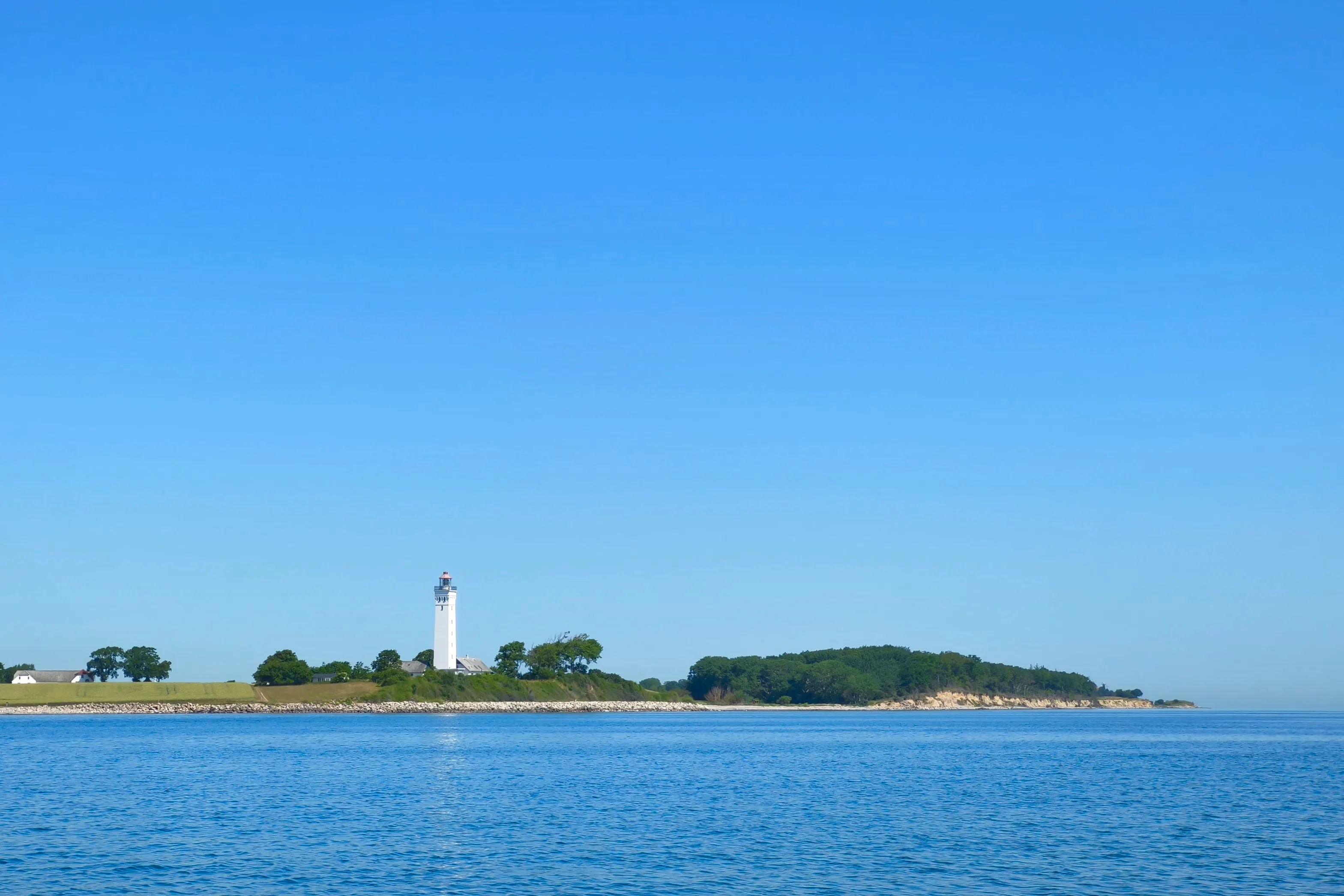
Holding both shores of the Great Belt has made it easy for Denmark to control and toll merchant ships since the 15th century; since 1857 the Great Belt has been an international waterway. After rounding the lighthouse at the southern tip of Langeland, we crossed the deep water route under full sail between two southbound freighters.
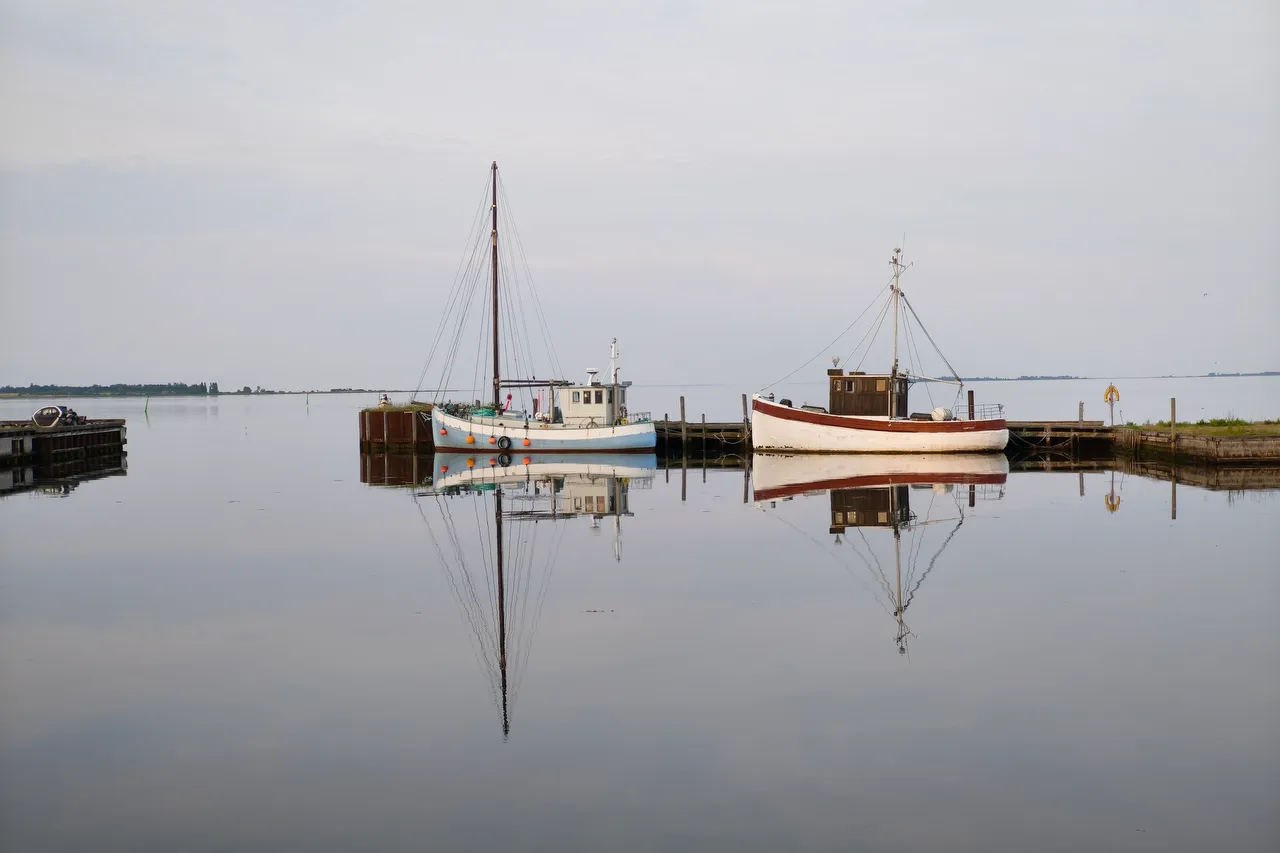
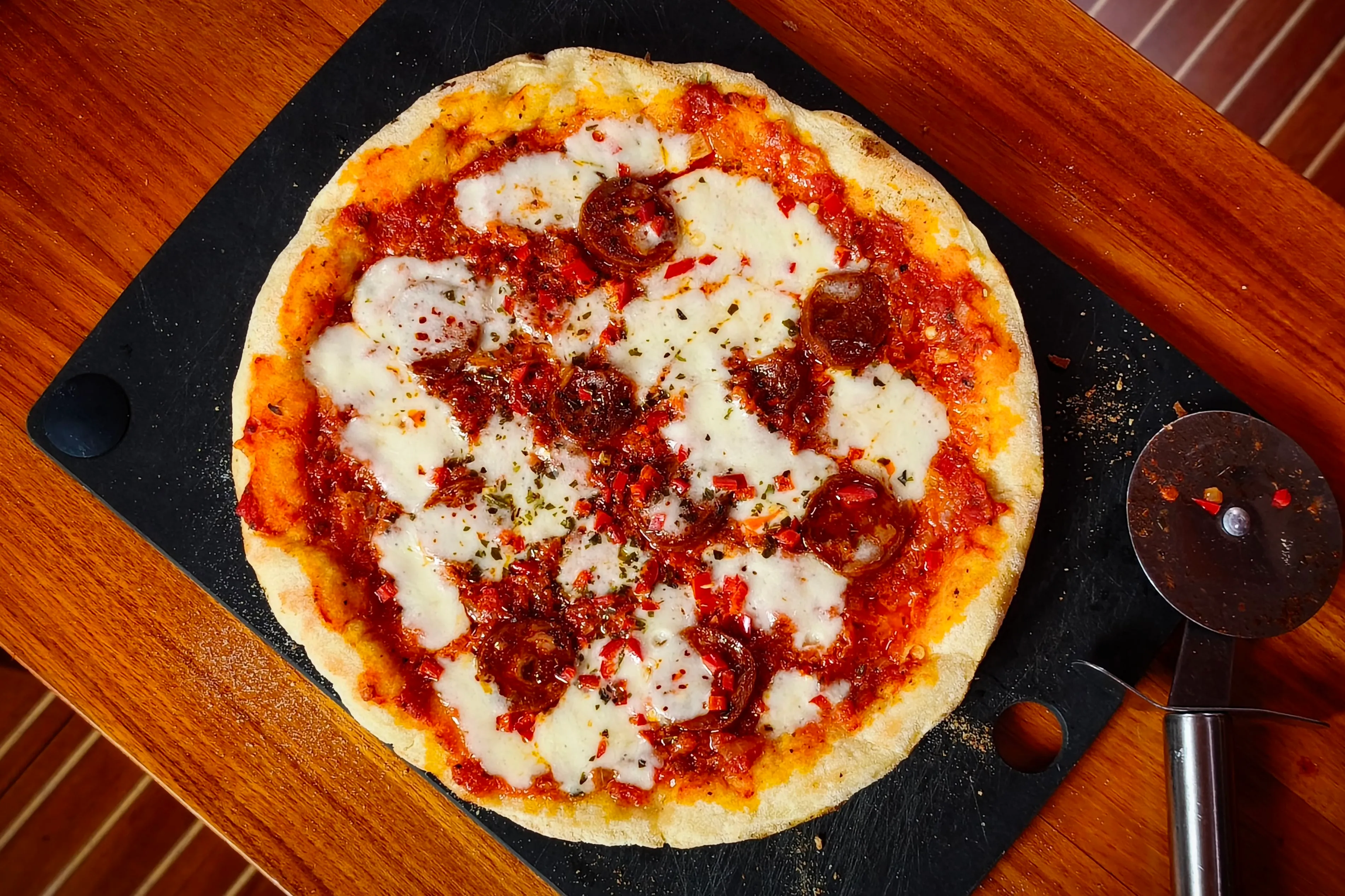
We entered the small fishing harbour of Vesterby on Fejø but reluctantly left because of its limited depth. The small island of Fejø is famous for its apples, and we found cider in the grocery store, the købmand, in Kragenæs on Lolland, as well as a berth in the marina. Dinner was pizza baked in the pan.
The air became sultry, and there was another thunderstorm passing by in the small hours of the next day – but the air remained humid. In the becalmed noonday heat, we had to run the engine to leave the Smålandsfarvandet. We passed through Storstrøm’s bridges, and moored in Stubbekøbing. The marina was one of the more expensive ones and whose showers recalled a lower league football club.
Leaving through the Sund
The Grønsund separating the islands Falster and Møn could be taken for a river; dense forest on the banks seemed to hide trolls. After passing its narrowest part, drizzling rain fell and Coelacanth silently glided through the marked fairway until we reached the open water and turned northeast. We had not yet grown used to the faint breeze that characterized the days in the Baltic so far, and the resulting discovery of slowness.
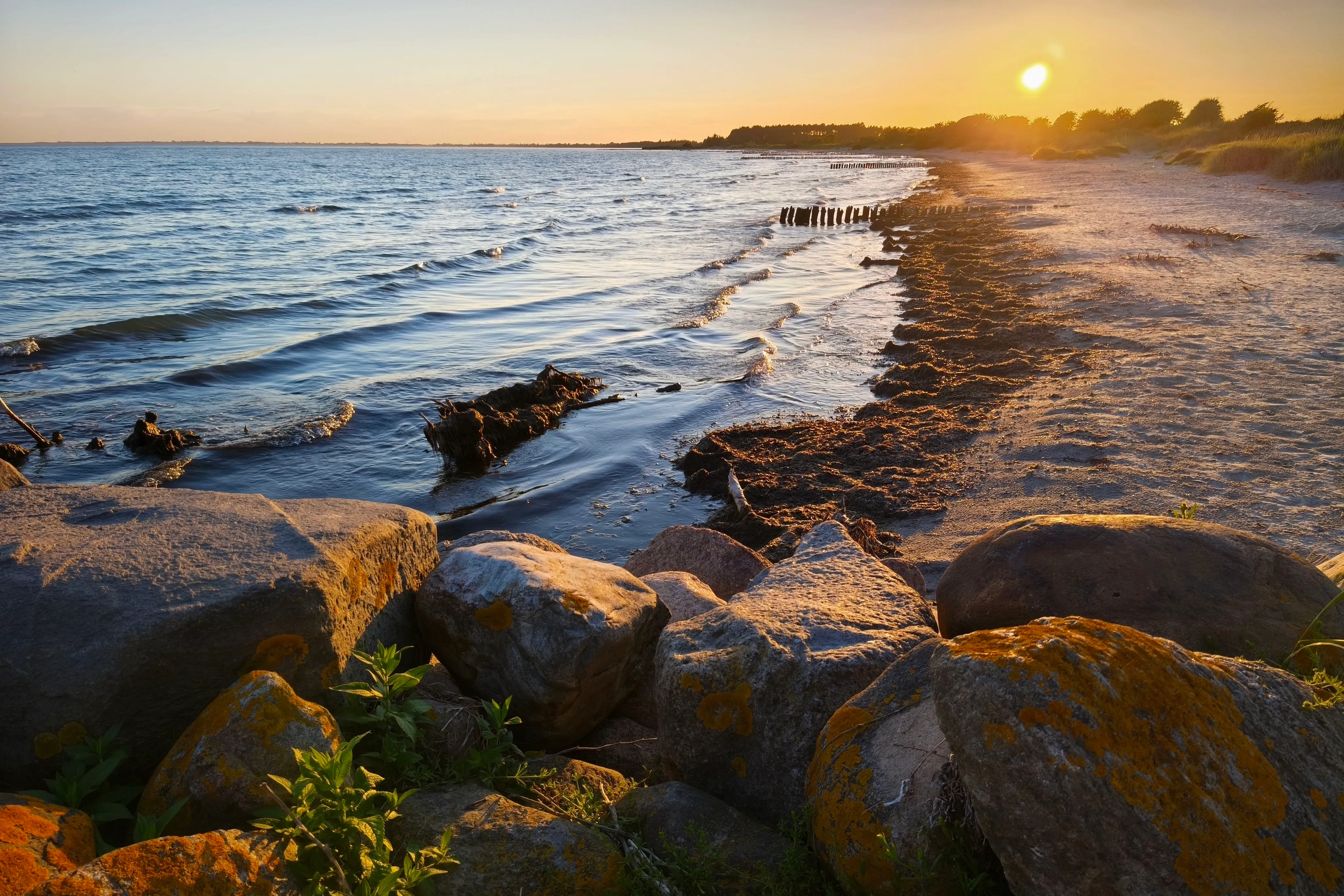
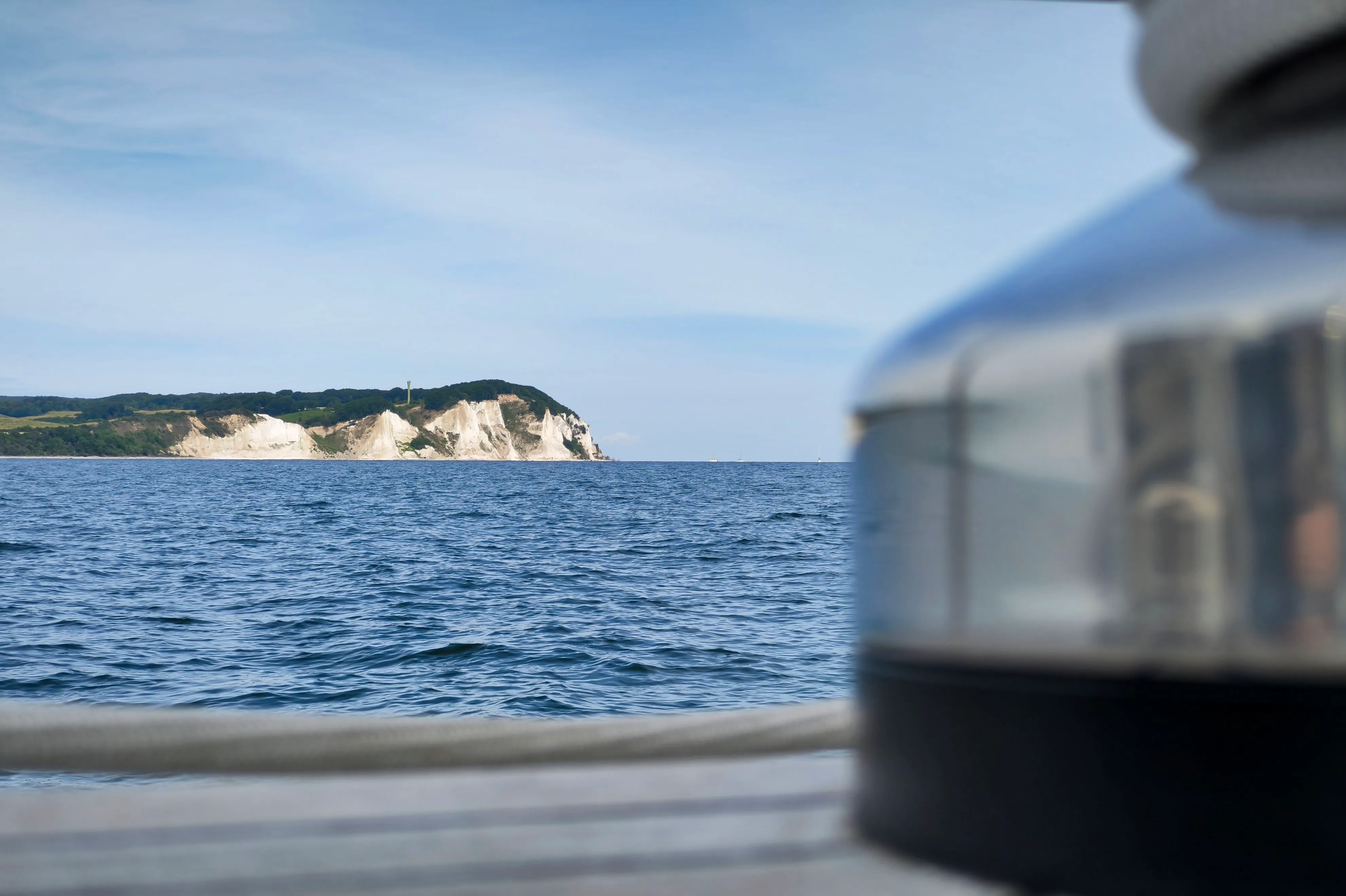
Klintholm on Møn was Denmark’s highlight of the journey so far. A quiet harbour surrounded by rolling hills and wheat fields, a beach with the clearest water, and the white chalk cliffs contrasting with the blue sea. Skovgaard and Gurlitt painted the white cliffs of Møn standing on land. Did they consider working from a boat, perhaps paying a fisher to sail out with them? Was the view from land to sea more alluring? At that time, the notion of the creation of islands such as Møn changed radically, from mythical thinking about biblical floods to a modern understanding of tectonic processes. The pressure of advancing glaciers led to the folded structure of the chalk cliffs. The Danish painters were aware of the early 19th century’s scientific advances in geology and depicted the forces of nature that created the landscape – a sober style.
The Danish Navy training ship HDMS Svanen and Thyra were moored in the harbour. These two 18.8 m wooden yawls were custom-built for the Danish navy in 1960/61 by Paul Molich’s Hundested shipyard; they’re full-keelers, fossils just like Coelacanth. On deck, three cadets were polishing the brass winches in the glistening sunshine, another hung some canvas on a hatch to guide a cooling breeze through the ship, and in the cockpit an officer studied the route on a sea chart.
Our own route planning had been done. The next day, we would leave Denmark and sail on to Sweden.
